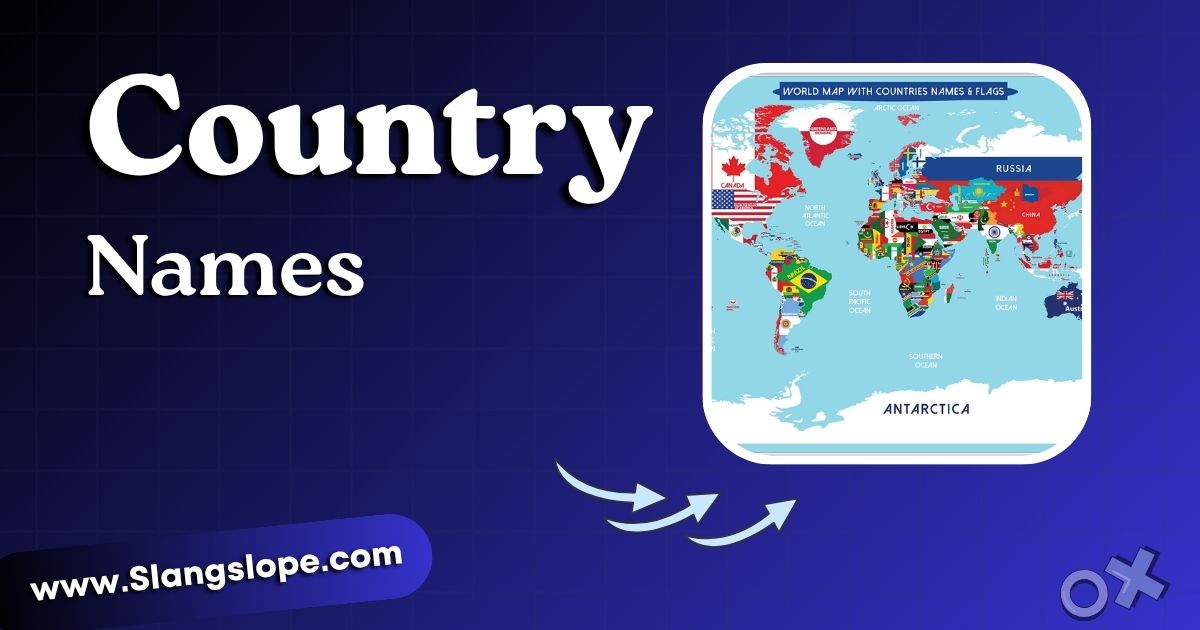
Every country name tells a story about rivers, rulers, tribes, or myths. Here’s the complete breakdown, organized by region, with real etymological roots.
Africa
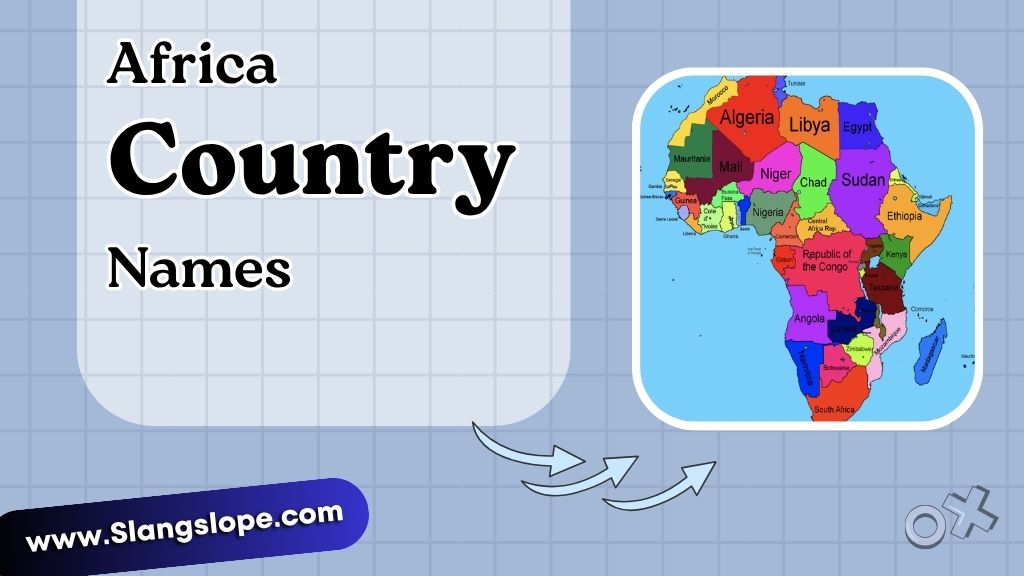
| Name | Meaning / Origin | Best For |
| Algeria | From Arabic Al-Jaza’ir (“the islands”) | Geography discussions, travel writing |
| Angola | From Ngola, a title of Mbundu kings | African history, cultural essays |
| Benin | Named after the Bight of Benin, possibly from Ubinu | West Africa studies |
| Botswana | “Land of the Tswana people” (Tswana language) | Southern Africa travel content |
| Burkina Faso | “Land of honorable people” — two languages combined (Mooré + Dioula) | Cultural identity topics |
| Burundi | From Urundi, meaning “homeland” in Kirundi | East Africa writing |
| Cabo Verde | Portuguese for “Green Cape,” named after the Cape Verde peninsula | Island nation content |
| Cameroon | Portuguese Rio dos Camarões — “River of Shrimp” | Colonial history discussions |
| Central African Republic | Literally describes its position on the continent | Political geography |
| Chad | From Lake Chad — possibly from Kanuri Tsade (“large expanse of water”) | Sahel region topics |
| Comoros | Arabic Juzur al-Qamar — “Islands of the Moon” | Indian Ocean island writing |
| Congo (DRC) | Named after the Congo River, from Bakongo people | Central Africa content |
| Congo (Republic) | Same river-based origin as DRC | West-Central Africa topics |
| Côte d’Ivoire | French for “Ivory Coast” — the historical ivory trade | Colonial Africa, economics |
| Djibouti | Likely from Afar gabouti (“plate”) or a local term for the harbor | Horn of Africa writing |
| Egypt | Greek Aigyptos, derived from Egyptian Hwt-Ka-Ptah (temple name) | Ancient civilization content |
| Equatorial Guinea | Spanish Guinea Ecuatorial — near the equator, near Guinea region | Rare nation spotlights |
| Eritrea | Italian, from Latin Mare Erythraeum — “Red Sea” | Horn of Africa history |
| Eswatini | “Land of the Swazis” — renamed from Swaziland in 2018 | Modern Africa, sovereignty topics |
| Ethiopia | Greek Aithiopia — “land of burnt-face people” (ancient Greek description) | Ancient history, travel |
| Gabon | From Portuguese Gabão — “cloak” (shape of the estuary) | Central Africa travel |
| Gambia | From the Mandinka name for the Gambia River | West Africa content |
| Ghana | Named after the Ghana Empire — Ga Na meaning “warrior king” | Empire history, West Africa |
| Guinea | Possibly from Berber Aginaw (“black people”) or a Tuareg place name | West Africa studies |
| Guinea-Bissau | Guinea + Bissau (its capital city) | Small nations, West Africa |
| Kenya | Named after Mount Kenya — possibly Kikuyu Kirinyaga (“white mountain”) | East Africa travel, nature |
| Lesotho | “Land of the Sotho people” | Southern Africa, landlocked nations |
| Liberia | Latin liber — “free” — founded by freed American slaves | Freedom history, diaspora topics |
| Libya | Ancient Greek Libyē — origin debated, possibly Berber Libu tribe | North Africa, ancient world |
| Madagascar | Name coined by Marco Polo — confused location, stuck ever since | Island biodiversity, geography |
| Malawi | Possibly from Maravi (“flames”) — a historical Bantu kingdom | East Africa, lake geography |
| Mali | Named after the Mali Empire — possibly Mandinka for “hippopotamus” or “place where the king lives” | Empire history |
| Mauritania | Named after the ancient Berber kingdom of Mauretania | North Africa, ancient kingdoms |
| Mauritius | Named after Dutch Prince Maurice of Nassau | Indian Ocean islands |
| Morocco | Named after the city Marrakesh — Spanish Marruecos | North Africa travel |
| Mozambique | Named after the island of Mussa ibn Mbiki — a local Swahili sheikh | East Africa, coastal content |
| Namibia | From the Nama word Namib — “vast place” (the Namib Desert) | Desert travel, Southern Africa |
| Niger | Named after the Niger River — possibly from Tuareg egerew n-igerewen (“river of rivers”) | West Africa content |
| Nigeria | Niger River + ia (Latin suffix meaning “land of”) | West Africa, population topics |
| Rwanda | Possibly from Kinyarwanda u Rwanda — “domain” | East Africa, recovery stories |
| São Tomé and Príncipe | Portuguese — “Saint Thomas” and “Prince” — two islands named by explorers | Small island nations |
| Senegal | From the Wolof phrase Sunuu Gaal (“our boat”) or the Zenaga Berber people | West Africa, culture |
| Seychelles | Named after Jean Moreau de Séchelles, French finance minister | Luxury travel, island geography |
| Sierra Leone | Portuguese Serra Leoa — “Lion Mountains” | West Africa geography |
| Somalia | From Somali people — origin disputed, possibly “go milk” (nomadic culture) | Horn of Africa, culture |
| South Africa | Describes its geographic position | Southern Africa travel |
| South Sudan | Southern part of Sudan — Sudan from Arabic bilad al-sudan (“land of black people”) | Newest nations, Africa politics |
| Sudan | Arabic bilad al-sudan — “land of black people” | North Africa, Nile topics |
| Tanzania | Blend of Tanganyika + Zanzibar — two territories merged in 1964 | Unique naming, East Africa |
| Togo | From Togo, a town name meaning “behind the sea” in Ewe language | West Africa, small nations |
| Tunisia | From Tunis — possibly Berber tns (“to lie down”) or Phoenician origin | Mediterranean, North Africa |
| Uganda | Named after the Buganda Kingdom — Buganda means “state” in Ganda | East Africa |
| Zambia | Named after the Zambezi River | Southern Africa, river geography |
| Zimbabwe | Shona dzimba dza mabwe — “houses of stone” | Southern Africa, ancient ruins |
Asia
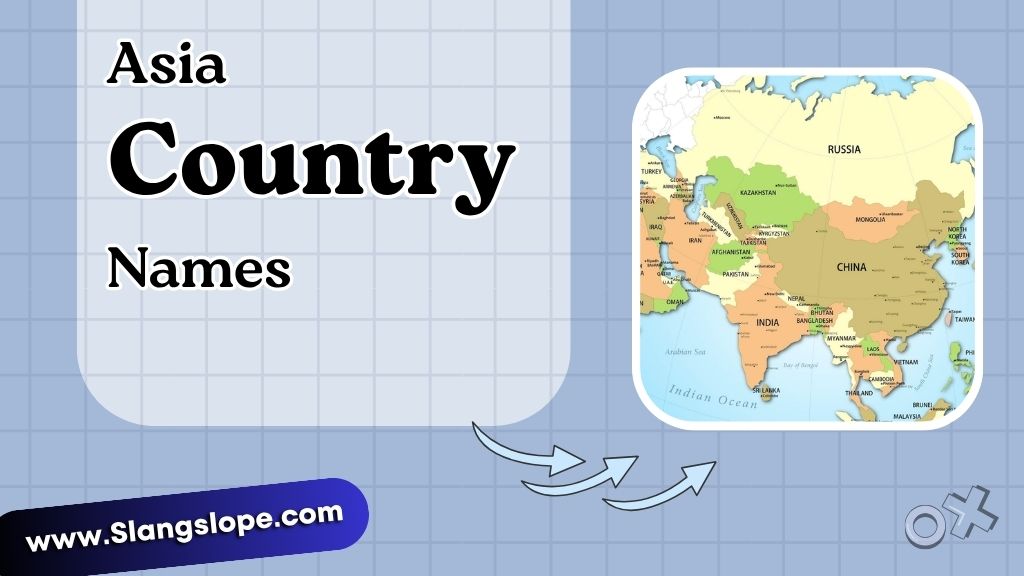
| Name | Meaning / Origin | Best For |
| Afghanistan | Persian — “land of the Afghans” (Afghan + -stan = “land of”) | Central Asia, history |
| Armenia | Named after Armenak, a legendary ancestor — or from Urartian Arme | Ancient civilizations |
| Azerbaijan | Persian — “land of fire” (Azar = fire) — due to natural gas flames | Caucasus, energy topics |
| Bahrain | Arabic Al-Bahrayn — “two seas” | Gulf states, island nations |
| Bangladesh | Bengali — “land of Bengal” (Bangla = Bengal, desh = land/country) | South Asia, independence |
| Bhutan | Possibly Sanskrit Bhu-Uttan (“high land”) or Bhots-ant (“end of Tibet”) | Himalayan travel |
| Brunei | Origin uncertain — possibly from Sanskrit Varunai (“seafarers”) | Southeast Asia, sultanates |
| Cambodia | From Kambuja — a Sanskrit name meaning “those born of Kambu” (mythical ancestor) | Southeast Asia history |
| China | From Sanskrit Cina, likely from the Qin dynasty | East Asia, ancient empires |
| Cyprus | Greek Kypros — named after copper (kupros), abundant on the island | Mediterranean, minerals |
| Georgia (country) | Likely from Persian Gurj or Greek Georgios — unrelated to the U.S. state | Caucasus travel |
| India | From Indus River — Greek Indía — from Sanskrit Sindhu (“river”) | South Asia, ancient history |
| Indonesia | Greek Indos (“Indian”) + nesos (“island”) — “Indian islands” | Southeast Asia, archipelago |
| Iran | Persian Aryana — “land of the Aryans” (ancient Iranian peoples) | Middle East, Persian history |
| Iraq | Arabic — possibly “fertile shore” or from Sumerian Uruk (ancient city) | Mesopotamia, ancient world |
| Israel | Hebrew Yisrael — “one who struggles with God” | Middle East, religion |
| Japan | Chinese Cipangu (“land of the rising sun”) — from Japanese Nihon | East Asia, culture |
| Jordan | Named after the Jordan River — Hebrew Yarden (“to flow down”) | Middle East travel |
| Kazakhstan | Kazakh Qazaq (free person) + -stan | Central Asia, steppe culture |
| Kuwait | Arabic Kut — “fortress built near water” | Gulf states |
| Kyrgyzstan | Kyrgyz + -stan — Kyrgyz possibly means “forty” (forty tribes) | Central Asia |
| Laos | Named after the Lao people | Southeast Asia |
| Lebanon | From Semitic lbn — “white” — referencing snow-capped mountains | Middle East, mountains |
| Malaysia | Sanskrit Malaya (“mountain”) + -ia | Southeast Asia, geography |
| Maldives | Sanskrit Maladweepa — “garland of islands” | Island travel |
| Mongolia | Mongol — possibly “brave” or from a river name | Central Asia, nomadic history |
| Myanmar | Burmese — the formal name for Burma — Mranma (literary) vs. Bama (spoken) | Southeast Asia, language |
| Nepal | Sanskrit — possibly “at the foot of the mountains” (nipa = foot of mountains) | Himalayan travel |
| North Korea | Korean — Joseon (“morning calm”) — Korea from Goryeo dynasty | East Asia, politics |
| Oman | Possibly from Uman, an ancient Arabian figure, or Semitic root for “settled” | Arabian Peninsula |
| Pakistan | Coined acronym in 1933 — Punjab, Afghania, Kashmir, Sindh, Baluchistan + stan | South Asia, creation stories |
| Palestine | From Philistia — land of the Philistines — Greek Palaistine | Middle East history |
| Philippines | Named after King Philip II of Spain (Felipe II) | Southeast Asia, colonial history |
| Qatar | Arabic — possibly from Qatara — a local water source name | Gulf states |
| Saudi Arabia | Named after the Al Saud royal family + Arabia (Arabic peninsula) | Middle East, monarchy |
| Singapore | Sanskrit Simhapura — “Lion City” | Southeast Asia, city-states |
| South Korea | Same etymology as North Korea — divided politically | East Asia |
| Sri Lanka | Sanskrit Siṃhaladvīpa — “Island of the Lion People” | South Asia, island travel |
| Syria | Greek Suria — possibly from Assyria or Hurrian Suri | Middle East, ancient history |
| Taiwan | From Tayouan — a Dutch romanization of an indigenous place name | East Asia, geography |
| Tajikistan | Tajik (Tāj = crown) + -stan | Central Asia |
| Thailand | Thai Mueang Thai — “land of the free” (Thai = free) | Southeast Asia travel |
| Timor-Leste | Timor = Malay for “east”; Leste = Portuguese for “east” — literally “East East” | Small nations, etymology |
| Turkey (Türkiye) | Land of the Turks — officially renamed Türkiye in 2022 | Eurasian geography |
| Turkmenistan | Turkmen + -stan — Turkmen meaning “Turk-like” | Central Asia |
| United Arab Emirates | Describes its political union of emirates | Gulf states |
| Uzbekistan | Uzbek (from Öz Beg Khan) + -stan | Central Asia, silk road |
| Vietnam | Viet (people group) + Nam (south) — Chinese Nanyue inspired | Southeast Asia history |
| Yemen | Possibly Arabic yumn (“blessed”) or yamīn (“right hand” — south from Mecca) | Arabian Peninsula |
Europe
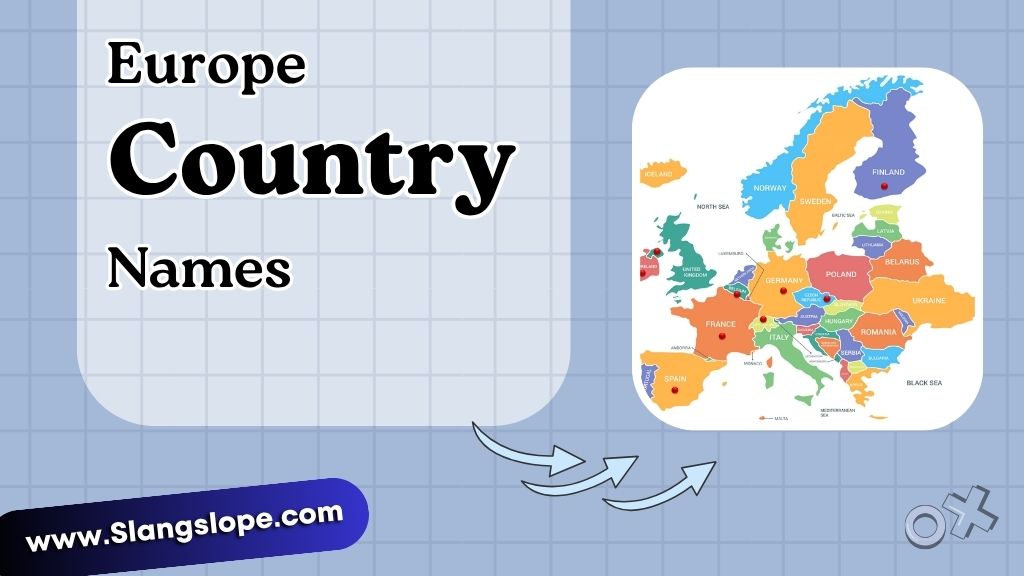
| Name | Meaning / Origin | Best For |
| Albania | Possibly from Illyrian alb (“white”) or a mountaintop tribe | Balkans travel |
| Andorra | Origin unclear — possibly Basque andurrial (“shrub-covered land”) | Microstate content |
| Austria | Old High German Ostarrichi — “eastern realm” | Central Europe, history |
| Belarus | Slavic — “White Russia” (bela = white, rus = Russia) | Eastern Europe |
| Belgium | Latin Belgica — named after the Celtic Belgae tribe | Western Europe, EU history |
| Bosnia and Herzegovina | Bosnia = Bosna River; Herzegovina = from “Herzog” (duke) in German | Balkans, history |
| Bulgaria | Named after the Bulgars — a Turkic-origin people | Eastern Europe |
| Croatia | Latin Croātia — from Slavic Hrvat (origin uncertain) | Adriatic travel |
| Cyprus | See Asia section — geopolitically split | Mediterranean |
| Czech Republic (Czechia) | From Čech — a legendary Slavic forefather | Central Europe |
| Denmark | Dene (Danish tribe) + mearc (Old English for “border”) | Scandinavia |
| Estonia | Possibly from ancient Aesti people — a Baltic coastal group | Baltic states |
| Finland | Finn (the people) + land — Norse origin | Nordic countries |
| France | Named after the Franks — a Germanic tribe (Franci) | Western Europe |
| Germany | Latin Germania — the Romans named it; Germans call it Deutschland (“people’s land”) | Central Europe |
| Greece | Latin Graecia — Greeks call their country Hellas | Ancient civilization |
| Hungary | Medieval Latin Hungaria — from the Huns and Onogurs (tribal names) | Central Europe |
| Iceland | Named by Norse settler Hrafna-Flóki — found ice on fjords | Nordic travel |
| Ireland | Old Irish Ériu (a goddess name) + land | Celtic history |
| Italy | Greek Italia — possibly from Oscan Víteliú (“land of young cattle”) | Mediterranean, history |
| Kosovo | Serbian/Albanian — from kos (“blackbird”) — “Field of Blackbirds” | Balkans, recent history |
| Latvia | Possibly from the Latgalians — a Baltic tribal group | Baltic states |
| Liechtenstein | German — “bright stone” — named after the ruling Liechtenstein family | Microstates |
| Lithuania | Origin debated — possibly from Lietava river | Baltic states |
| Luxembourg | Old High German Lucilinburhuc — “little fortress” | Western Europe, EU institutions |
| Malta | Possibly from Phoenician maleth (“shelter/harbor”) | Mediterranean islands |
| Moldova | Named after the Moldova River — possibly from a hunting dog named Molda | Eastern Europe |
| Monaco | From Greek Monoikos — a Hercules epithet meaning “single house” | Microstates, luxury |
| Montenegro | Venetian Italian — “Black Mountain” (monte + negro) | Balkans travel |
| Netherlands | Dutch Neder (“lower”) + land — describes the low-lying terrain | Western Europe |
| North Macedonia | Named after the ancient Macedonian kingdom | Balkans |
| Norway | Old Norse Norðvegr — “northern way/path” | Scandinavia |
| Poland | Slavic Polanie — “people of the plains” | Eastern Europe |
| Portugal | Latin Portus Cale — a Roman port city name | Iberian Peninsula |
| Romania | Named after Rome — Roman settlers identified strongly with Rome | Eastern Europe |
| Russia | From Rus’ — possibly Norse Roþs (“rowers”) or a Slavic tribal name | Eurasia, largest country |
| San Marino | Named after Saint Marinus, who founded it in 301 AD | World’s oldest republic |
| Serbia | Slavic Srbi — origin uncertain, possibly “kinsmen” | Balkans |
| Slovakia | From Slověne — a Slavic people group | Central Europe |
| Slovenia | Same root as Slovakia — Slověne | Central Europe |
| Spain | Latin Hispania — possibly Phoenician I-Shpania (“land of rabbits”) | Iberian Peninsula |
| Sweden | Old English Swēoðēod — “people of the Swedes” | Scandinavia |
| Switzerland | Named after Schwyz canton — origin uncertain | Central Europe |
| Ukraine | Slavic ukraina — “borderland” or “frontier” | Eastern Europe |
| United Kingdom | Describes its union of England, Scotland, Wales, Northern Ireland | Western Europe, monarchy |
| Vatican City | From Latin Vaticanus — a hill name, possibly Etruscan origin | Religion, microstates |
North & Central America + Caribbean
| Name | Meaning / Origin | Best For |
| Antigua and Barbuda | Antigua — Spanish “ancient”; Barbuda — possibly “bearded” (referring to fig trees) | Caribbean travel |
| Bahamas | Spanish Baja Mar — “shallow sea” | Caribbean geography |
| Barbados | Portuguese Los Barbados — “the bearded ones” (bearded fig trees) | Caribbean islands |
| Belize | Possibly from Maya Belikin (“toward the east”) or Spanish corruption | Central America |
| Canada | Iroquoian kanata — “village” or “settlement” | North America |
| Costa Rica | Spanish — “rich coast” | Central America |
| Cuba | Indigenous Taíno — possibly cubao (“where fertile land is abundant”) | Caribbean history |
| Dominica | Latin Dominica — “Sunday,” the day Columbus arrived | Caribbean |
| Dominican Republic | Named after Santo Domingo (Saint Dominic) | Caribbean |
| El Salvador | Spanish — “The Savior” — named after Jesus Christ | Central America |
| Grenada | Spanish Granada — named after the Spanish city | Caribbean |
| Guatemala | Nahuatl Cuauhtēmallān — “place of many trees” | Central America |
| Haiti | Indigenous Taíno Ayiti — “land of high mountains” | Caribbean history |
| Honduras | Spanish — “depths” — possibly referring to deep offshore waters | Central America |
| Jamaica | Taíno Xaymaca — “land of wood and water” | Caribbean culture |
| Mexico | Nahuatl — named after the Mexica people (Aztec) — possibly “navel of the moon” | North America, ancient history |
| Nicaragua | Named after chief Nicarao + agua (water) — Spanish fusion | Central America |
| Panama | Indigenous origin — possibly meaning “abundance of fish” or “abundance of butterflies” | Central America |
| Saint Kitts and Nevis | Saint Kitts = Saint Christopher; Nevis = Spanish Nuestra Señora de las Nieves (“Our Lady of the Snows”) | Caribbean |
| Saint Lucia | Named after Saint Lucy by French settlers | Caribbean |
| Saint Vincent and the Grenadines | Named after Saint Vincent of Saragossa | Caribbean |
| Trinidad and Tobago | Trinidad = Spanish “Trinity”; Tobago = possibly from tobacco (Taíno word) | Caribbean |
| United States | Describes its political structure — a union of states | North America |
South America
| Name | Meaning / Origin | Best For |
| Argentina | Latin argentum — “silver” — Spanish expected silver deposits | South America |
| Bolivia | Named after Simón Bolívar, independence leader | South America, liberation history |
| Brazil | From pau-brasil (“brazilwood”) — a red dye tree | South America, nature |
| Chile | Origin debated — possibly Mapuche chilli (“where the land ends”) | South America |
| Colombia | Named after Christopher Columbus (Cristóbal Colón) | South America |
| Ecuador | Spanish — “equator” — sits on the equator | Geography, South America |
| Guyana | Indigenous Guiana — “land of many waters” | South America |
| Paraguay | Guaraní — possibly “river that flows through the sea” | South America |
| Peru | Possibly from indigenous Birú — a local chief’s name | South America, Inca history |
| Suriname | From Surinen — an indigenous group in the area | South America |
| Uruguay | Guaraní — “river of the painted birds” | South America |
| Venezuela | Spanish — “little Venice” — stilted houses on Lake Maracaibo reminded explorers of Venice | South America |
Oceania
| Name | Meaning / Origin | Best For |
| Australia | Latin Terra Australis — “southern land” | Southern Hemisphere |
| Fiji | From Viti — the indigenous name; Fiji is the Tongan pronunciation | Pacific islands |
| Kiribati | Pronounced “Kiribas” — Gilbertese version of “Gilberts” (the Gilbert Islands) | Pacific, unique pronunciation |
| Marshall Islands | Named after British captain John Marshall | Pacific geography |
| Micronesia | Greek mikros (“small”) + nesos (“island”) | Pacific, island groups |
| Nauru | Nauruan — possibly anáoero (“I go to the beach”) | Smallest republic |
| New Zealand | Named after Zeeland, a Dutch province — originally Nieuw Zeeland | Pacific, Māori culture |
| Palau | Palauan — possibly from belau (“village”) | Pacific diving |
| Papua New Guinea | Papua = Malay “frizzy hair”; New Guinea = Spanish explorer compared locals to West Africa’s Guinea | Pacific, diversity |
| Samoa | Possibly Sa Moana — “sacred center of the universe” in Samoan | Polynesia |
| Solomon Islands | Named by Spanish explorer Álvaro de Mendaña — believed he found biblical King Solomon’s gold | Pacific history |
| Tonga | Tongan — “south” | Polynesia |
| Tuvalu | Tuvaluan — “eight standing together” (eight inhabited atolls) | Pacific, climate topics |
| Vanuatu | Bislama — “land eternal” (vanu = land, tu = stand/eternal) | Pacific travel |
Editor’s Top Picks: Most Interesting Country Name Origins
Pakistan — the only country name that is a deliberate acronym, assembled by a Cambridge student in 1933 from the initials of five regions. No other country name was engineered quite like this one.
Timor-Leste — means “east” in two different languages simultaneously. Timor is Malay for east, Leste is Portuguese for east. Redundant by design, this name is a linguistic artifact of colonialism.
Liberia — named from Latin liber (“free”), making it one of the only countries whose name is literally a declaration of freedom. Founded in 1847 by freed American slaves, the name was political on purpose.
Venezuela — Spanish sailors saw indigenous stilt houses over Lake Maracaibo and thought of Venice. So they called it “little Venice.” One visual impression, one country name, forever.
Iceland and Greenland — a famous geographical misdirection. Iceland is actually greener than Greenland. The names were either strategic (to discourage settlers from Iceland) or simply based on where explorers first landed on each island.
Burkina Faso — the only country name stitched together from two different local languages to mean “land of honorable people.” Both Mooré and Dioula speakers can read dignity in the name.
Kiribati — spelled like it has four syllables, said like it has three (“Kiribas”). It is a phonetic rendering of the colonial name “Gilberts” using the local language’s rules. Every time someone mispronounces it, history repeats itself.
How to Actually Learn and Remember Country Names
Group by suffix, not by alphabet. Countries ending in -stan (Kazakhstan, Uzbekistan, Tajikistan, Pakistan, Afghanistan, Turkmenistan, Kyrgyzstan) all share Persian/Turkic roots meaning “land of.” Learn one, understand the pattern.
Track naming after people. Bolivia (Bolívar), Colombia (Columbus), Philippines (Philip II), Seychelles (Jean Moreau de Séchelles), Saudi Arabia (Al Saud family) — a surprising number of countries carry a colonizer or ruler’s ego in their name.
Notice river-named countries. Niger, Nigeria, Senegal, Gambia, Congo, Zambia, Jordan, Cambodia — rivers gave birth to national names long before borders were drawn.
Watch for double meanings. Timor-Leste means “east east.” Montenegro means “black mountain” and has a mountain named that. São Tomé is a saint’s name on a volcanic island. The literal is often hiding in plain sight.
Use the three-language test. For any country, ask: what do locals call it, what did colonizers call it, and what does the original indigenous name mean? You will find three different stories every time.
Quick Comparison: Naming Patterns Across Regions
| Pattern | Examples | What It Reveals |
| Named after rulers/people | Bolivia, Philippines, Saudi Arabia, Seychelles | Colonial power or dynasty pride |
| Named after rivers | Niger, Jordan, Gambia, Zambia | Settlement patterns near water |
| Means “land of [people]” | Afghanistan, Pakistan, Kazakhstan, Botswana | Tribal and ethnic identity |
| Named by explorers (descriptive) | Costa Rica, Montenegro, Sierra Leone | First impressions stuck |
| Indigenous names preserved | Haiti, Jamaica, Canada, Fiji | Survived colonial renaming |
| Named after cardinal directions | Ecuador, Norway, Austria, Timor-Leste | Geographic self-awareness |
| Named after saints | El Salvador, Saint Lucia, São Tomé | Catholic missionary influence |
Discover More Names Guide

Hi, I am Malaika and I studied MPhil English at The University of Faisalabad. Names have always fascinated me — especially the stories, cultural roots, and hidden meanings behind the labels we give to people, pets, places, and characters.
I write for Slangslope.com because naming isn’t just about picking words; it’s about finding the right identity. My work focuses on uncovering accurate origins, real-world usage, and creative naming ideas that fit actual context rather than generic lists.
My goal is simple: if you leave a page finding the perfect name or understanding its meaning better than before, then the article has done its job.