Mythology, folklore, and fiction are packed with powerful female demons beings who ruled fear, desire, chaos, and night across dozens of cultures. Here’s every category worth knowing.
Quick Style Snapshot
| Style | Tone | Best For |
| Mythological | Ancient, weighty | Fantasy writing, lore-heavy projects |
| Folkloric | Earthy, regional | Worldbuilding, cultural storytelling |
| Elegant/Dark | Soft but sinister | Characters, usernames, OC names |
| Fierce/Bold | Raw power | Villains, fighters, horror fiction |
| Modern Invented | Fresh, cinematic | Games, novels, anime-inspired content |
Mythological Female Demon Names (Cross-Cultural)
| Name | Meaning / Origin | Best For |
| Lilith | “Night monster” / Hebrew | The original rebellious female demon — perfect for any dark protagonist |
| Lamia | Child-devouring spirit / Greek | Horror fiction, cautionary tale characters |
| Hecate | Goddess of witchcraft and crossroads / Greek | Morally complex magic-users |
| Ereshkigal | Queen of the Underworld / Sumerian | Powerful ruler archetypes |
| Tiamat | Primordial chaos dragon-goddess / Babylonian | Final bosses, ancient evil |
| Rangda | Demon queen of witches / Balinese | Cultural horror, ritual antagonists |
| Anat | Warrior goddess with bloodlust / Canaanite | Battle demons, fierce warriors |
| Sekhmet | Lioness of destruction / Egyptian | Righteous-but-dangerous characters |
| Izanami | Goddess of death and decay / Japanese | Underworld queens, grief-driven villains |
| Kali | Destroyer of evil / Hindu | Anti-heroes, protective destroyers |
| Morrígan | Phantom queen of war / Celtic | Shapeshifters, war spirits |
| Hel | Ruler of the Norse underworld / Norse | Cold, calculating villain queens |
| Empusa | Shape-shifting demon seductress / Greek | Manipulation-based characters |
| Naamah | Angel of prostitution and seduction / Jewish mysticism | Temptress archetypes |
| Agrat bat Mahlat | One of four queens of demons / Kabbalistic | Coven leaders, demon royalty |
Folkloric & Regional Female Demon Names
| Name | Meaning / Origin | Best For |
| Pontianak | Spirit of a woman who died in childbirth / Malay | Horror, grief-fueled antagonists |
| Aswang | Shape-shifting evil spirit / Filipino | Monsters with tragic backstories |
| Penanggalan | Detached floating head spirit / Southeast Asian | Body horror, curse characters |
| Strix | Blood-drinking owl-woman / Roman | Night terrors, vampire-adjacent beings |
| Baba Yaga | Wild witch of the forest / Slavic | Morally ambiguous crones |
| Yuki-onna | Woman of snow and cold death / Japanese | Tragic, beautiful, deadly characters |
| Churel | Vengeful spirit of wronged woman / South Asian | Justice-seeking villains |
| Louhi | Witch queen of the frozen north / Finnish | Icy tyrants, power-hoarding antagonists |
| Obayifo | Vampire-witch hybrid / West African (Ashanti) | Blood magic users |
| La Llorona | Weeping woman who drowns children / Mexican | Tragic horror figures, ghost women |
| Cihuateteo | Spirits of women who died in childbirth / Aztec | Warrior-spirit hybrids |
| Bhūtni | Female ghost of malevolent intent / Indian | Haunting, possession-based stories |
| Nachzehrer | Grave-gnawing revenant spirit / German | Undead characters with twisted hungers |
| Drude | Night-pressing nightmare spirit / Germanic | Sleep paralysis demons, dream invaders |
Elegant & Rare Female Demon Names
These carry a dark grace — beautiful on the surface, dangerous underneath.
| Name | Meaning / Origin | Best For |
| Morwenna | “Maiden” with dark Welsh roots | Gothic romance characters |
| Seraphel | Invented from “seraph” — fallen angel tone | Fallen angel archetypes |
| Vesperine | From “vesper” (evening star) | Twilight demons, mystery figures |
| Noctessa | Latin-rooted invented name meaning night-queen | Vampire queens, shadow royalty |
| Thessaly | Ancient Greek region; eerie literary use | Witches, arcane scholars |
| Calixta | “Most beautiful” / Greek — ironic for demons | Seduction-based villains |
| Malachar | Invented; echoes “malach” (angel/messenger) | Corrupt messengers, cursed beings |
| Liriel | Elvish-toned invented name, soft yet dark | Fae-demon crossovers |
| Selvaine | Old French roots, forest and shadow | Forest spirits turned wicked |
| Drusilla | “Dewy-eyed” / Latin — made sinister by use in fiction | Vampire fiction, tragic villains |
| Aelindra | Invented; melodic, ancient-feeling | High fantasy demons |
| Vespera | Evening / Latin | Night-born beings, melancholy villains |
| Zephyrine | From Zephyr, wind goddess tone | Air-elemental demons |
| Isadora | “Gift of Isis” / Greek | Manipulative priestess demons |
Fierce & Bold Female Demon Names
Short, sharp, and built for power.
| Name | Meaning / Origin | Best For |
| Vexara | Invented from “vex” — to torment | Combat demons, torment specialists |
| Drak’sha | Invented; guttural, warrior-coded | War demons, dark knights |
| Ragnara | Female form of Ragnar; conquest energy | Conquering demon generals |
| Zorah | “Dawn” / Hebrew — twisted into darkness | Demons who mock light |
| Kyrmis | Invented; hard consonants, commanding | Demon commanders |
| Bruthas | Dark invented; heavy and grim | Brute-force horror villains |
| Scytha | From “scythe”; death imagery | Death-aspect demons |
| Hellrika | Invented; bold Nordic ring | Viking-coded underworld figures |
| Vorga | Guttural invented name, orcish edge | Warrior-tribe demons |
| Malkira | “Queen” (malka) twisted / Hebrew-rooted | Dark queens, tyrant demons |
| Xareth | Invented; sharp, alien-feeling | Cosmic horror beings |
| Igrath | Variation of Agrat; ancient power | Coven leaders, ritual demons |
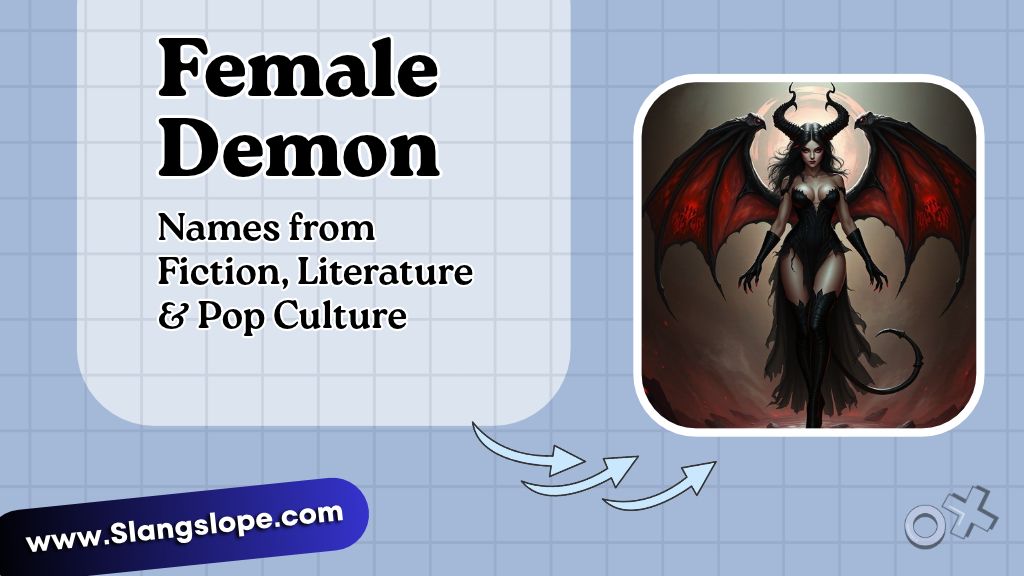
Female Demon Names from Fiction, Literature & Pop Culture
| Name | Source | Why It Works |
| Trigon’s daughters (Raven) | DC Comics | Half-demon archetype made iconic |
| Meg | Supernatural (TV) | Snarky, modern demon done right |
| Ruby | Supernatural (TV) | Deceptive, long-game villain energy |
| Maleficent | Disney folklore adaptation | Horned, regal, cinematic |
| Mazikeen | Lucifer / Neil Gaiman | Half-faced demon with warrior loyalty |
| Mystique | X-Men (shapeshifter coded) | Morally fluid, transforming |
| Jadis | C.S. Lewis, Narnia | Cold ruler of eternal winter |
| Tamlin (female coded) | ACOTAR-adjacent | Fae-demon overlap in modern fiction |
| Nyx | Greek myth / Hades game | Goddess of night, maternal darkness |
| Thessaly | The Sandman / Gaiman | Cold, precise, terrifying witch |
Editor’s Top Picks
1. Lilith — No female demon name carries more cultural weight. She predates the Bible in Sumerian references, and her story of refusing submission made her the patron of every rebellious female character ever written. Use her when you want instant mythological authority.
2. Ereshkigal — Underused outside academic circles, yet she’s the original Queen of the Dead. She rules with grief and rage, not seduction. Perfect for writers tired of the “temptress demon” trope.
3. Morrígan — Three-in-one goddess of war, fate, and death. She shapeshifts, prophecies, and meddles in battles. Any character who manipulates from the shadows fits this name.
4. Yuki-onna — Japan’s snow woman is terrifying because she’s tragic. She kills not from malice alone but from sorrow. Ideal for demons with emotional depth.
5. Mazikeen — Lifted directly from Jewish demonology and refined through Neil Gaiman’s Sandman, this name has cinematic pedigree without being overused.
6. Vespera — For writers who want elegance over horror. Latin roots, evening associations, and a sound that feels timeless without being clichéd.
7. Churel — Rooted in South Asian folklore, she’s a wronged woman returned for vengeance. Culturally specific, narratively powerful, and almost never used in Western fiction — a genuine gap most writers miss.
How to Pick the Right Female Demon Name
Match the sound to the personality.
Hard consonants (K, X, G, R) read as aggressive and commanding. Soft vowels and L/V/S sounds feel mysterious and seductive. A chaos demon named “Liriel” and a warrior demon named “Xareth” hit very differently — and that’s the point.
Syllable count shapes rhythm.
Two-syllable names (Kali, Hel, Nyx) punch hard in dialogue. Three-syllable names (Lamia, Morrígan, Vespera) carry narrative weight. Four-plus syllables (Ereshkigal, Agrat bat Mahlat) signal ancient, mythological scale.
Check cultural roots before you commit.
Names like Rangda, Aswang, and Churel carry specific religious and cultural meaning in living traditions. Using them respectfully — with awareness of their origin — matters. Borrowing from a culture’s demon lore without any understanding is how fiction embarrasses itself.
Avoid the obvious pile.
Lilith, Maleficent, and Hecate appear on every list. They work, but if you want your character to feel original, dig into Sumerian, Balinese, West African, or Finnish sources. The underused cultural traditions are where the freshest names live.
Test it out loud.
A name that looks striking on paper but trips over itself in dialogue will frustrate readers. Say it three times fast. If it flows, it works.
Quick Comparison: Name Styles at a Glance
| Category | Sound Profile | Emotional Register | Example Names |
| Ancient Mythological | Heavy, slow, grand | Power, dread, awe | Ereshkigal, Tiamat, Izanami |
| Folkloric Regional | Earthy, varied | Fear, tragedy, revenge | Churel, La Llorona, Pontianak |
| Elegant Dark | Smooth, flowing | Mystery, seduction | Vespera, Drusilla, Calixta |
| Bold & Fierce | Sharp, guttural | Rage, dominance | Vexara, Scytha, Malkira |
| Modern Invented | Flexible, cinematic | Versatile | Seraphel, Noctessa, Aelindra |
Discover More Names Guide

Hi, I am Malaika and I studied MPhil English at The University of Faisalabad. Names have always fascinated me — especially the stories, cultural roots, and hidden meanings behind the labels we give to people, pets, places, and characters.
I write for Slangslope.com because naming isn’t just about picking words; it’s about finding the right identity. My work focuses on uncovering accurate origins, real-world usage, and creative naming ideas that fit actual context rather than generic lists.
My goal is simple: if you leave a page finding the perfect name or understanding its meaning better than before, then the article has done its job.