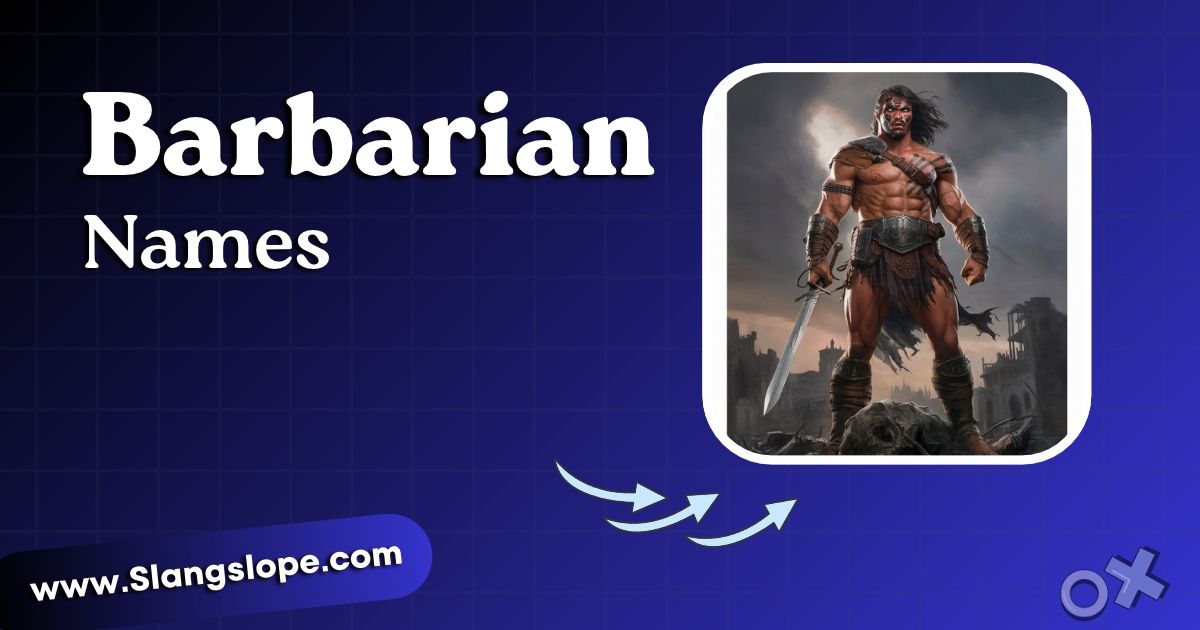
Barbarian names carry raw power guttural sounds, warrior roots, and stories carved from iron and survival.
Classic Norse & Germanic Barbarian Names
| Name | Meaning / Origin | Best For |
| Ragnar | “Warrior’s judgment” — Old Norse regin (counsel) + hari (army) | Viking warlords, saga heroes |
| Ulfric | “Wolf ruler” — Old English/Norse compound | Nord chieftains, alpha fighters |
| Bjorn | “Bear” — Old Norse, literal animal strength | Berserkers, heavy warriors |
| Sigurd | “Victory guardian” — Old Norse sigr + varðr | Legendary saga characters |
| Gunnar | “Battle warrior” — Old Norse gunnr (war) | Archers, aggressive fighters |
| Halvard | “Rock guardian” — Old Norse hallr + varðr | Defenders, shield warriors |
| Thorvald | “Thor’s ruler” — divine + power compound | Mythic warriors, divine champions |
| Ivar | “Bow warrior” — Old Norse yr (yew bow) | Rangers, tacticians |
| Leif | “Heir/descendant” — Old Norse leifr | Explorers, clan heirs |
| Skjalg | “Crooked, oblique” — Old Norse battle-name | Cunning fighters, outlaws |
| Fenrik | Derived from Fenrir, the great wolf | Beast-themed barbarians |
| Dagr | “Day” — Old Norse, one who brings dawn or death | Dawn raiders, brutal scouts |
| Orm | “Serpent” — Old Norse ormr | Sneaky warriors, sea raiders |
| Haldor | “Thor’s rock” — divine strength compound | Immovable tank-style fighters |
| Randvar | “Shield warrior” — Old Norse rönd + herr | Shield bearers, line breakers |
Fierce Female Barbarian Names
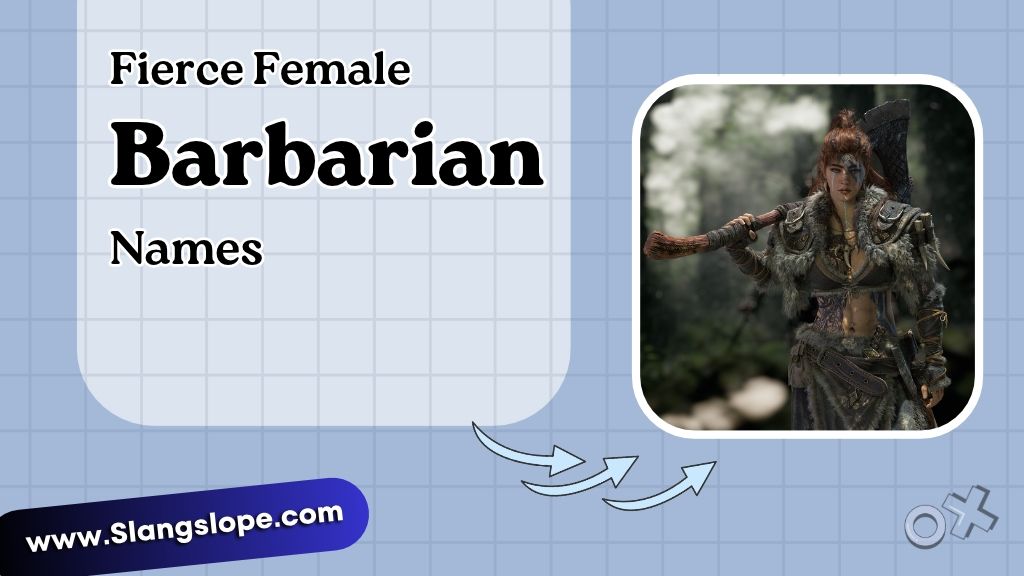
| Name | Meaning / Origin | Best For |
| Brynhildr | “Armor battle” — Old Norse brynja + hildr | Shield-maidens, valkyrie figures |
| Svanhild | “Swan battle” — Old Norse, beauty meets war | Elegant but lethal warriors |
| Ragnhild | “Battle counsel” — Old Norse regin + hildr | War strategists, clan leaders |
| Yrsa | “She-bear” — Old Norse feminine bear name | Berserker women, primal fighters |
| Göndul | A valkyrie name meaning “wand-wielder” | Magical warriors, runic fighters |
| Heiðrún | “Bright secret” — mythological goat of Valhalla | Mystical, divine-touched women |
| Sigríðr | “Victory rider” — Old Norse sigr + ríðr | Cavalry leaders, mounted warriors |
| Aldis | “Battle goddess spirit” — Old Norse aldr | Ancient, respected warrior women |
| Vigdís | “War goddess” — Old Norse víg + dís | Divine war champions |
| Hervor | “Army caution/ward” — saga heroine name | Sword-wielding, solo warriors |
| Thordis | “Thor’s goddess spirit” — divine feminine | Thunder-themed female fighters |
| Skadi | “Damage/shadow” — Norse giantess of winter | Cold, ruthless hunters |
| Bodil | “Battle remedy/atonement” — Old Norse | Warriors who fight for redemption |
| Randgríðr | “Shield of peace” — valkyrie name | Guardian warriors |
| Gullveig | “Gold power” — mythological seiðr witch | Sorcerer-warrior hybrid characters |
Savage & Brutal Barbarian Names (Fantasy / DnD)
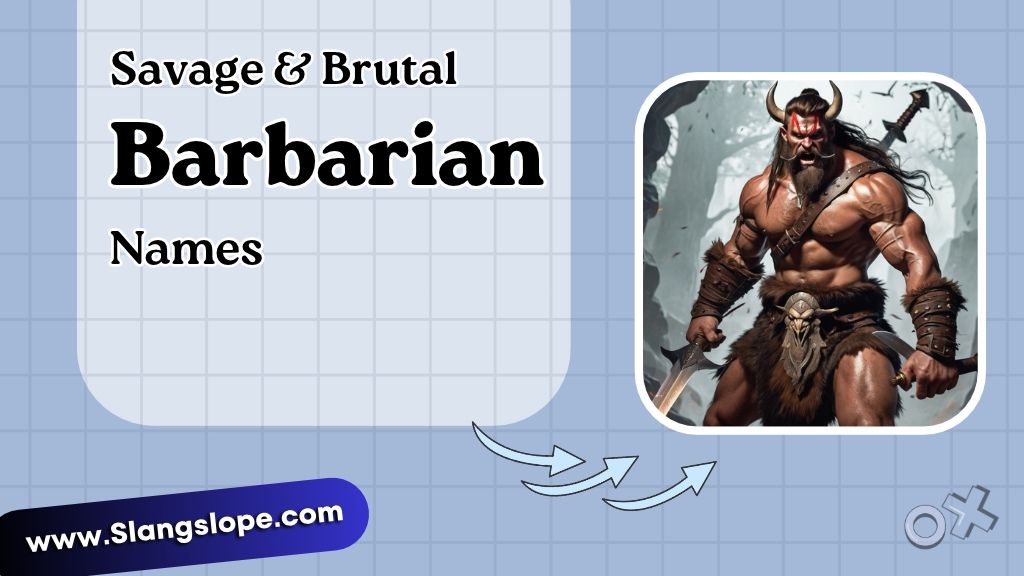
| Name | Meaning / Origin | Best For |
| Kragg | Invented hard-consonant name, rocky resonance | Stone-based or mountain tribes |
| Vornak | Fantasy compound, vor (before/first) + nak (strike) | Frontline destroyers |
| Dravuk | Dark vowel + hard stop — aggression phonetics | Shadow tribe warriors |
| Thrak | Short, explosive — pure guttural impact | Orc-adjacent barbarians |
| Gruldak | Deep growl opening + heavy ending | Cave dwellers, underground warriors |
| Zarog | Sharp Z opening, rolling close | Fast, unpredictable fighters |
| Murnak | Murky + strike — constructed dark feel | Swamp or poison warriors |
| Bolvok | Bol (evil, Old Slavic echo) + hard vok | Villain-adjacent barbarians |
| Skorrn | Scorn + horn phonetic blend | Prideful, contemptuous brutes |
| Harrak | Desert-heat resonance, guttural | Dry-land nomadic warriors |
| Vuldris | Heavy + serpent — fantasy compound | Snake cult barbarians |
| Drovan | Rough Slavic-echo compound | Eastern steppe warrior feel |
| Kraxis | Sharp K + Latin-echo suffix | Gladiator-type destroyers |
| Zulgath | Dark fantasy guttural compound | Undead-adjacent, cursed warriors |
| Thraxis | Thrace region echo + warrior suffix | Historically-flavored fantasy fighters |
Hunnic, Gothic & Eastern Steppe Names
| Name | Meaning / Origin | Best For |
| Attila | Possibly “little father” — Gothic atta | Supreme warlords, feared conquerors |
| Bleda | Brother of Attila — Hunnic royal name | Rival warriors, co-rulers |
| Munduk | Attila’s father — authentic Hunnic | Ancestral, elder warrior figures |
| Dengizich | Son of Attila — Hunnic royalty | Legacy characters, heirs to power |
| Uldin | Early Hunnic king — historical | Nomadic raiders, early campaign leaders |
| Rua | Attila’s uncle — Hunnic chieftain | Older, cunning war leaders |
| Balamir | First documented Hunnic ruler | Origin-story characters |
| Alatheus | Gothic co-king — Greuthungi Goths | Gothic barbarian nobility |
| Fritigern | “Peace desire” — Visigothic leader who defeated Rome | Rebel warlords, anti-empire fighters |
| Radagaisus | Gothic king who invaded Italy | Relentless, unstoppable raider types |
| Hermanaric | “Army ruler” — great Ostrogothic king | Empire-builders, conqueror types |
| Vidimer | Gothic noble name | Secondary warlords, clan captains |
| Gaiseric | “Spear ruler” — Vandal king | Sea raiders, sacking specialists |
| Valamir | “Mighty famous” — Ostrogothic king | Legendary, long-reigning warlords |
| Thorismund | “Thor protection” — Visigothic king | Divine-backed warrior rulers |
Celtic & Pictish Barbarian Names
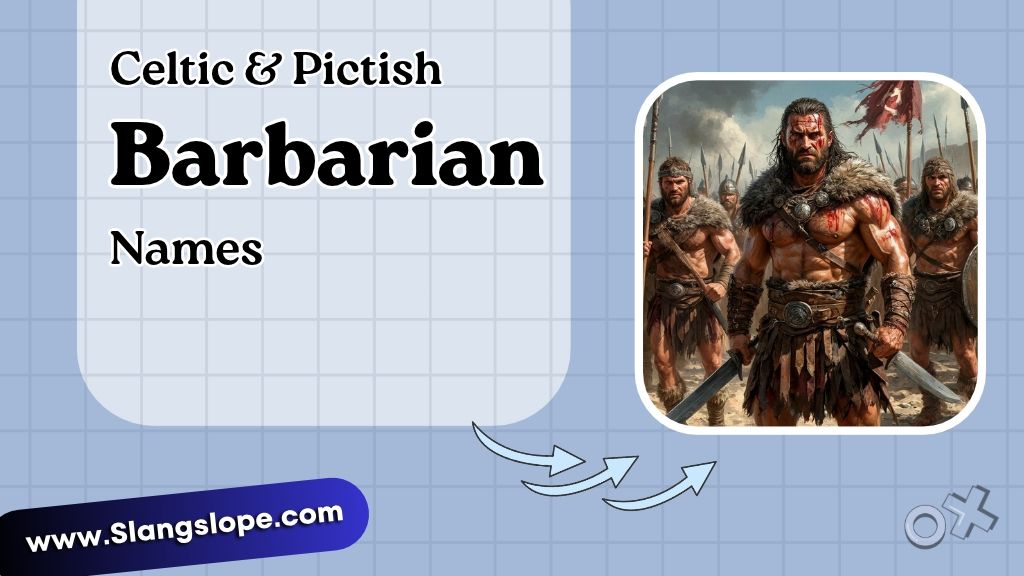
| Name | Meaning / Origin | Best For |
| Vercingetorix | “King of great warriors” — Gaulish | Ultimate Gallic war leaders |
| Caratacus | “Loving” — Brythonic Celtic | Defiant resistance fighters |
| Boudicca | “Victory” — Brittonic Celtic queen | Female warlords, revenge figures |
| Cunobelin | “Hound of Belenus” — Celtic sun god | Druid-warrior hybrids |
| Brennus | “Raven/king” — Gaulish, sacked Rome | City-sacking raiders |
| Dumnorix | “King of the deep world” — Gaulish | Underworld-themed warriors |
| Ambiorix | “King of the surrounding” — Belgian Gaul | Guerrilla leaders, ambush warriors |
| Cassivellaunus | Brythonic king who fought Caesar | Defensive military strategists |
| Togodumnus | “Leader of the Togodumni” — Celtic | Tribe commanders |
| Mandubracius | “Black traitor” — Brythonic | Betrayer characters, morally complex |
| Caractoc | Welsh form of Caratacus | Welsh-flavored barbarians |
| Lugotorix | “Lugh’s king” — Celtic sun warrior | Light-based or divine warriors |
| Eppillus | “Little horse” — Celtic coin king | Swift, cavalry-focused fighters |
| Catumandus | “Battle pony lord” — Celtic | Mounted tribal warriors |
| Tasciovanus | “Badger’s slaughter” — Celtic king | Tenacious, ground-fighting brutes |
Editor’s Top Picks — Names That Hit Hardest
These aren’t just cool-sounding — each one earns its spot:
1. Vercingetorix — Historically real, phonetically massive, and it actually means “king of great warriors.” If your character is the apex barbarian, nothing tops this. It’s almost too powerful for fiction.
2. Brynhildr — The original shield-maiden name. Pre-dates every fantasy knockoff. Use the full form, not the simplified “Brunhilde” — the Old Norse spelling carries 10x more weight.
3. Ragnar — Two syllables, instantly recognizable, backed by real saga history. Works in games, fiction, and TTRPG alike without feeling generic.
4. Yrsa — The underused gem on this list. “She-bear” in Old Norse, and it appears in actual saga literature. Short, brutal, and sounds nothing like every other female fantasy name.
5. Attila — One name that needs no explanation. The historical weight alone makes it terrifying. Fictional characters named Attila carry instant menace.
6. Skadi — Norse giantess of winter and hunting. Three letters short, mythology deep. Perfect for cold-climate or hunter-class barbarians who don’t bother with speeches.
7. Vornak — The best original fantasy creation on this list. The vor- prefix feels Proto-Germanic without being a real word, and -nak lands like a blade. Memorable, unique, and impossible to mistake for anything soft.
How to Build Your Own Barbarian Name
You don’t need a name generator. You need a formula.
The Sound Rule: Real barbarian names — historic and mythological — lean hard on specific consonants: R, G, K, V, Th, Sk, Dr, Gr. Vowels are short and punchy: a, u, i. Avoid soft endings like -ly, -ie, -ine.
Syllable Count:
- 1–2 syllables: Immediate, brutal (Bjorn, Thrak, Orm) — best for berserkers and solo fighters
- 3 syllables: Authority and legend (Ragnar, Ulfric, Vornak) — best for chieftains
- 4+ syllables: Reserved for kings and myths (Vercingetorix, Brynhildr) — use sparingly
Culture Matching:
| Tribe Type | Sounds to Use | Sounds to Avoid |
| Norse/Viking | Th-, -ulf, -björn, -rik | Soft S, -lee, -ine |
| Celtic/Gaul | -rix, -dun, Ver-, Cun- | Hard K openings, -nak |
| Hunnic/Steppe | Short vowels, -ic, -ur | Long Latin suffixes |
| Fantasy/DnD | Guttural clusters, -ak, -uk, -ath | Anything that rhymes with a flower |
The Meaning Test: If you know what your character stands for — revenge, survival, destruction, protection — pick a name whose etymology mirrors it. Halvard (rock guardian) for a tank. Skadi (damage) for a hunter. Meaning adds invisible depth that readers feel without knowing why.
Quick Style Comparison Table
| Style | Example Names | Tone | Best Used In |
| Historic Norse | Ragnar, Gunnar, Sigurd | Grounded, saga-authentic | Historical fiction, TTRPG |
| Historic Celtic | Vercingetorix, Boudicca | Defiant, epic | Roman-era stories, strategy games |
| Historic Hunnic | Attila, Uldin, Bleda | Terrifying, foreign | Invasion narratives, conqueror arcs |
| Fantasy Invented | Vornak, Kragg, Zulgath | Raw, flexible | DnD, video games, fantasy novels |
| Female Warrior | Brynhildr, Yrsa, Skadi | Fierce, mythic | Any genre — stop using Xena variants |
| Short/Brutal | Thrak, Orm, Dagr | Punchy, animalistic | Grunts, monsters, unnamed fighters |
Discover More Names Guide

Hi, I am Malaika and I studied MPhil English at The University of Faisalabad. Names have always fascinated me — especially the stories, cultural roots, and hidden meanings behind the labels we give to people, pets, places, and characters.
I write for Slangslope.com because naming isn’t just about picking words; it’s about finding the right identity. My work focuses on uncovering accurate origins, real-world usage, and creative naming ideas that fit actual context rather than generic lists.
My goal is simple: if you leave a page finding the perfect name or understanding its meaning better than before, then the article has done its job.