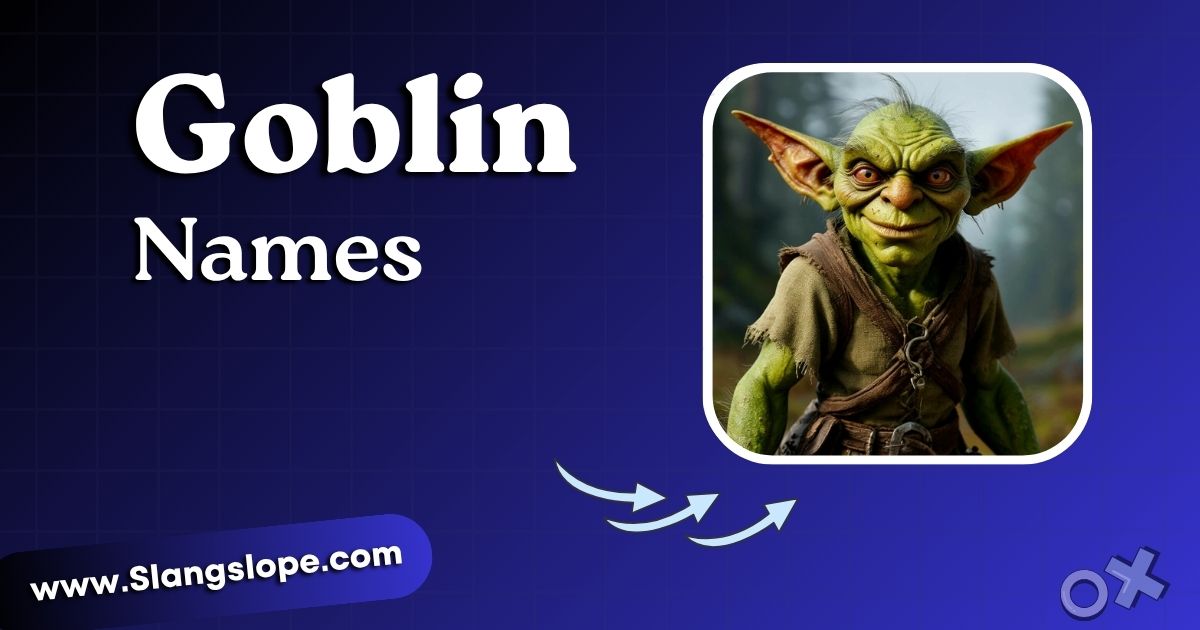
Goblins go by many names and the right one can make your character, story, or game feel instantly alive.
Editor’s Top Picks
These seven names stand out for their phonetic punch, lore depth, and sheer memorability:
Skrix — Two sharp consonants bookending a single vowel. It sounds fast, sneaky, and slightly dangerous. Perfect for a rogue-type goblin who talks too fast and steals too often.
Nuzzgut — Ugly in the best way. The “nuzz” feels rodent-like, and “gut” grounds it in physical, grotesque humor. Works brilliantly for a goblin merchant or reluctant ally.
Vreel — Deceptively soft for a goblin name. The liquid “l” ending gives it an almost elvish lilt, making it ideal for a goblin who thinks it’s better than everyone else.
Bogwick — Earthy and English-sounding. Has the quality of a place-name turned personal, like this goblin was literally born in a bog and owns it.
Crimpshaw — Sounds like a legal term a goblin would invent. Great for trickster goblins, con artists, or any character who bends rules for a living.
Snaggra — Feminine-leaning without being delicate. Aggressive opener, rolling middle, hard stop. A war-chief name hiding inside a scout’s body.
Flicktongue — A compound name that tells you everything immediately. Show, don’t tell — and this name does both at once.
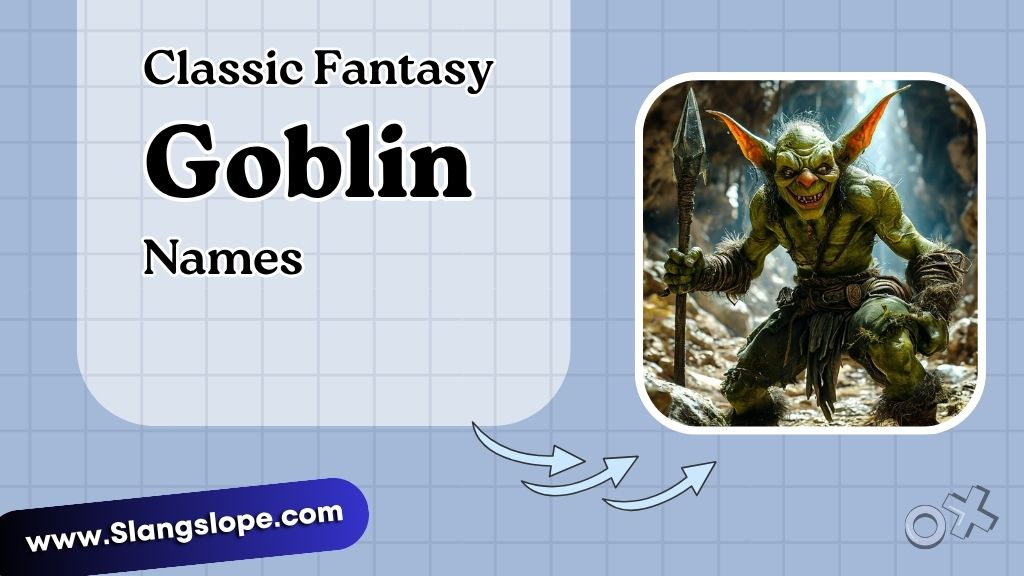
Classic Fantasy Goblin Names
| Name | Meaning / Origin | Best For |
| Grix | Old Germanic root gric, meaning “to grip” | Warrior goblins, fighters |
| Mog | Proto-Celtic for a lowly servant or thrall | Servant characters, comic relief |
| Sniv | Related to “snivel” — whimpering, weak | Cowardly goblins, informants |
| Zug | Possibly Norse sug, “to pull” | Brutes, laborers |
| Krog | Old English-adjacent, rough and guttural | Cave-dwelling goblins |
| Rix | Latin diminutive of “rex” (king) — ironic | Self-important goblin leaders |
| Grub | Old English grubbian, to dig in dirt | Underground goblins, miners |
| Fitch | Middle English for a polecat (weasel family) | Sneaky, wiry goblin scouts |
| Nob | British slang turned fantasy — means “head” | Goblin nobles, pretentious types |
| Skrag | Scandinavian skragge, a gaunt creature | Skinny, creepy goblins |
Warhammer & D&D Lore-Style Goblin Names
These follow the naming conventions of established tabletop and miniature wargaming systems — guttural, tribal, and built for war.
| Name | Meaning / Origin | Best For |
| Gorfang | “Gore” + Old Norse fang (catch/grip) | Warhammer-style warboss |
| Skarsnik | Invented compound — “skar” (scar) + “snik” (sneak) | Cunning general goblins |
| Rippa | Onomatopoeia — self-explanatory | Melee-focused, savage fighters |
| Nazgrob | “Naz” (dark/death prefix) + “grob” (goblin word for goblin) | Goblin shaman or priest |
| Bograt | Bog + rat — pure environment descriptor | Swamp-tribe goblins |
| Grizgutz | Invented: “griz” (grinding) + “gutz” | Chaotic neutral brute types |
| Snazgit | Warhammer fan-coined — “snaz” (fancy) + “git” (fool) | Class-climbing goblins |
| Kruel | Deliberate misspelling of “cruel” — very Warhammer | Sadistic goblin captains |
| Dregbad | “Dreg” (bottom of the barrel) + “bad” | Lowest-ranking but dangerous |
| Wazzock | British insult repurposed as goblin identity | Bumbling but beloved goblins |
Female Goblin Names
| Name | Meaning / Origin | Best For |
| Snaggra | Invented; harsh opener softened by the “a” ending | Warrior matriarchs |
| Vreel | Possibly from vrille (French spiral) | Quick, acrobatic goblins |
| Niska | Slavic diminutive feel; sharp and agile-sounding | Scouts, assassins |
| Gritta | Germanic grit + feminine suffix | Stubborn, tenacious characters |
| Yelka | Eastern European root feel; sounds wild | Shamans, herbalists |
| Prixie | “Prix” (goblin-ified) + pixie echo — subversive | Mischievous illusionists |
| Skarla | “Scar” + “-la” ending, like a dark Scarlett | Battle-hardened fighters |
| Murgit | Invented; “mur” (murmur) + guttural stop | Whisperers, spies |
| Drekka | Norse drekkja means “to drown” | Dark magic users |
| Furzle | Invented; sounds small and unpredictable | Young goblins, tricksters |
Funny & Punny Goblin Names
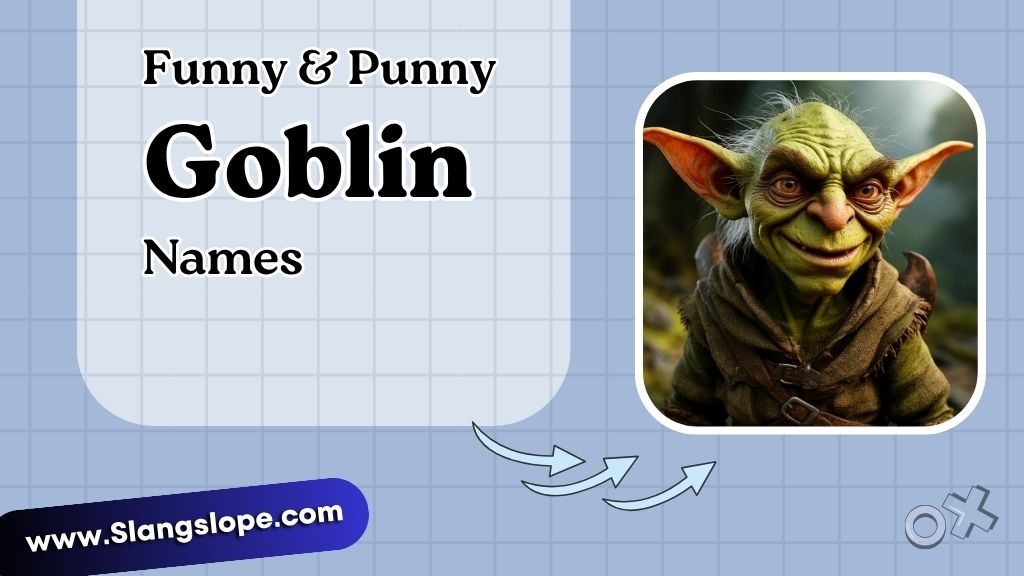
No shame here. Sometimes you need a goblin named after a sandwich.
| Name | Meaning / Origin | Best For |
| Snot Weasel | Exactly what it sounds like | Comedy campaigns |
| Glork | Sounds like something going wrong | Accident-prone goblins |
| Blunderfist | Compound — clumsy hands, self-explanatory | Fighter who keeps missing |
| Picklepox | Pickle + pox — gloriously dumb | Disease-obsessed goblins |
| Gimblewart | “Gimble” (Jabberwocky echo) + wart | Over-confident weaklings |
| Nuzzgut | “Nuzz” (nosing around) + gut | Glutton goblins, merchants |
| Crimpshaw | Sounds legal and made-up simultaneously | Con artists |
| Wrigglewort | Wriggle + wort (plant suffix) | Herbalist goblins gone wrong |
| Flobble | Pure invented sound — sounds wet | Marsh-dwelling comic goblins |
| Sneerix | Sneeze + rix — royalty with allergies | Pompous, sickly goblins |
Cool & Badass Goblin Names
| Name | Meaning / Origin | Best For |
| Skrix | Sharp consonant cluster, invented | Rogues, assassins |
| Varnek | Slavic-adjacent invented name | Warlords |
| Drazul | “Draz” (invented) + “-ul” (dark suffix convention) | Dark mages, warlocks |
| Kreth | Harsh monosyllable, zero softness | Ruthless mercenaries |
| Zivath | “Ziv” (Hebrew: radiance) + “-ath” suffix | Paradoxically charismatic goblins |
| Skorne | Deliberate echo of “scorn” | Vengeance-driven characters |
| Vrax | Hard and fast — no syllable wasted | Battle leaders |
| Mordnik | “Mord” (German: murder) + Slavic suffix | Assassin goblins |
| Cragspire | Compound — crag + spire, environmental | Mountain clan leaders |
| Slivex | “Sliv” (sliver) + “-ex” (out/former) | Exiled, cunning loners |
Goblin Names for Video Games & MMOs
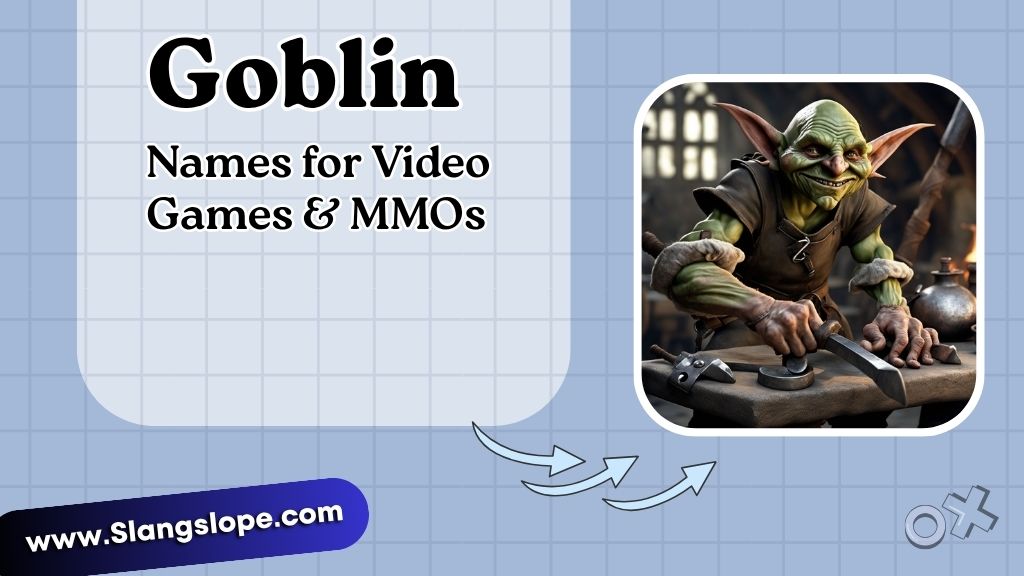
Short, typed fast, readable on a nameplate at a glance.
| Name | Meaning / Origin | Best For |
| Flux | Latin fluxus (flow, instability) | Trickster class builds |
| Rixel | Invented; pixel-adjacent | Tech/steampunk goblins |
| Znix | Pure invented — fast to type | Speed-focused characters |
| Krev | Short, Slavic-feel invented | PvP goblins |
| Sprax | Spring + rax — energetic | Agility builds |
| Glint | Old English glisian (to glitter) | Treasure-focused characters |
| Grimp | “Grimace” + “imp” compressed | Debuff-specialist builds |
| Skiff | Old Norse skip (boat) — small and fast | Scout/support builds |
| Nyx | Greek goddess of night | Night-ops goblins |
| Vex | Latin vexare (to trouble) | Harassment playstyles |
Goblin Tribe & Clan Names
Because every goblin belongs somewhere.
| Clan Name | Vibe / Origin Feel | Best For |
| The Rustclaw Tribe | Industrial, scavenger | Steampunk or junkyard settings |
| Grimbog Warband | Swamp + war compound | Swamp campaign settings |
| The Skittering Sons | Movement-based, creepy | Underground dungeon factions |
| Flicktongue Clan | Named after a founding trickster | Merchant or spy guilds |
| Rotspore Brotherhood | Decay + spore — fungal feel | Underdark or mushroom forest |
| The Cracked Skull Mob | Blunt, violent, no pretense | Raiding parties |
| Murktide Collective | Murk + tide — water-adjacent | Coastal goblin settlements |
| Ironsnout Hold | Smithing + anatomy compound | Blacksmith goblin clans |
| Cinderpaw Pack | Fire + movement | Volcano or ash-land tribes |
| The Hollow Eye Court | Sinister and political | Goblin nobility, spy rings |
Goblin Names Inspired by Real Languages
These pull from actual etymology — grounding fantasy in something real.
| Name | Language Root | Literal Meaning | Best For |
| Strix | Latin | A type of screech owl / witch | Night-dwelling goblins |
| Koba | Georgian | Means “brave” (ironic use) | Cowardly goblins with delusions |
| Gnarly | Old English gnyrran | To creak or snarl | Wild, feral goblins |
| Vrid | Old Norse vrida | To twist or writhe | Contortionist/spy goblins |
| Mire | Middle English | Swamp, bog ground | Swamp goblins |
| Brix | Germanic brechen | To break | Demolition-happy goblins |
| Tok | Proto-Slavic | A sharp blow | Martial goblins |
| Nax | Greek nyx variant | Night | Stealth builds |
| Grak | Proto-Germanic krakkaz | To crack or creak | Loud, blundering goblins |
| Sprig | Old Norse sproti | A small branch/shoot | Young goblins, nature scouts |
How to Build Your Own Goblin Name
The Consonant Rule: Goblins sound best with hard stops (k, x, g, t, b) and sibilants (s, z, sk, sn). Avoid too many soft sounds — “Mellowlief” is an elf name. “Skritch” is a goblin name.
Syllable Count: One or two syllables hit hardest for combat goblins. Three syllables work for political or elder goblins. Four or more usually means the goblin is either ancient or lying about being important.
The Gut-First Test: Say the name out loud. Does it sound like something being knocked over? Good. Does it sound like a lullaby? Probably wrong direction.
Compound Name Formula: Pick an action word (snag, grip, flick, gnaw) + a body part or object (claw, gut, tongue, fang). Results: Gnawclaw, Gripfang, Flicktongue, Snaggut. Simple. Reliable.
Avoid These Traps:
- Names that sound too human (Brian the Goblin is a joke character, not a villain)
- Names that are too long to remember mid-session
- Names that clash with the setting’s tone (whimsical names in a dark campaign fall flat)
Quick Style Comparison Table
| Style | Example Names | Tone | Best Setting |
| Guttural/War | Gorfang, Kreth, Vrax | Aggressive, brutal | Dark fantasy, Warhammer |
| Earthy/Folksy | Bogwick, Grub, Mog | Grounded, humble | Low fantasy, village settings |
| Elegant/Ironic | Vreel, Rix, Zivath | Subversive, witty | Political intrigue, comedy |
| Punny/Silly | Glork, Picklepox, Flobble | Comedic | Light campaigns, kids’ games |
| Short/MMO-Ready | Flux, Znix, Vex | Sleek, fast | Video games, online play |
| Lore-Deep | Skarsnik, Nazgrob, Strix | World-building heavy | D&D, TTRPG campaigns |
Discover More Names Guide

Hi, I am Malaika and I studied MPhil English at The University of Faisalabad. Names have always fascinated me — especially the stories, cultural roots, and hidden meanings behind the labels we give to people, pets, places, and characters.
I write for Slangslope.com because naming isn’t just about picking words; it’s about finding the right identity. My work focuses on uncovering accurate origins, real-world usage, and creative naming ideas that fit actual context rather than generic lists.
My goal is simple: if you leave a page finding the perfect name or understanding its meaning better than before, then the article has done its job.