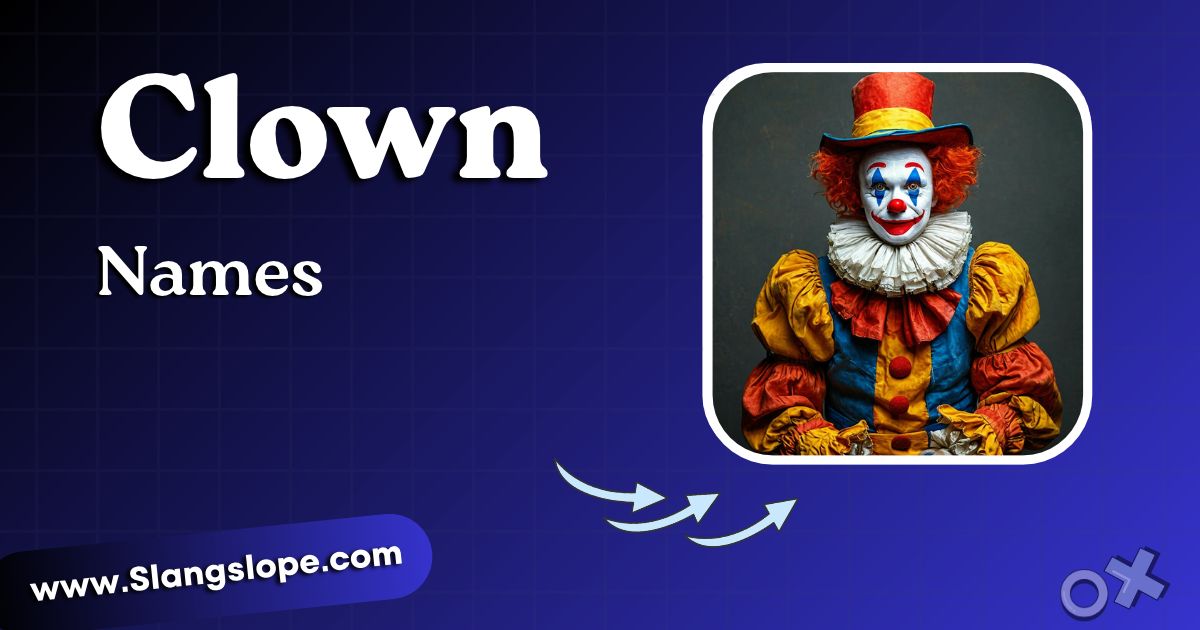
Clown names carry real weight the right one can make a room full of kids erupt in giggles or send chills down a grown adult’s spine.
Editor’s Top Picks
Puddles — Not just a cute name. It works on three levels: clumsiness, sadness (tears puddle), and the visual of an oversized clown splashing through life. Perfect for mime-inspired acts.
Rictus — If you need a horror clown name that doesn’t try too hard, this one lands quietly and stays. It’s anatomical, not cartoonish — which makes it far more unsettling than anything with “blood” or “death” in it.
Zanni — The most historically loaded name on this entire list. It’s the direct root of the English word “zany,” which means every time someone calls something zany, they’re unknowingly referencing a 15th-century Italian street clown.
Pierrot — Timeless. The French theater tradition of Pierrot gives any clown character immediate depth — melancholy, lovable, literary. Strong choice for performers who want audiences to feel something beyond laughter.
Honk Huckleberry — Pure comedic architecture. The hard “K” sounds in both words create a rhythm that’s funny before you even understand the name. Comedy writers know that “K” sounds are inherently funnier — this name weaponizes that.
Whimsy — Underused and overlooked. While everyone reaches for “Giggles” or “Bobo,” Whimsy carries a slightly more sophisticated charm that works across age groups without feeling babyish.
Hollow — The best horror clown names suggest absence, not presence. Hollow implies there’s nothing real behind the smile — which is the actual fear underneath coulrophobia.
Classic & Traditional Clown Names
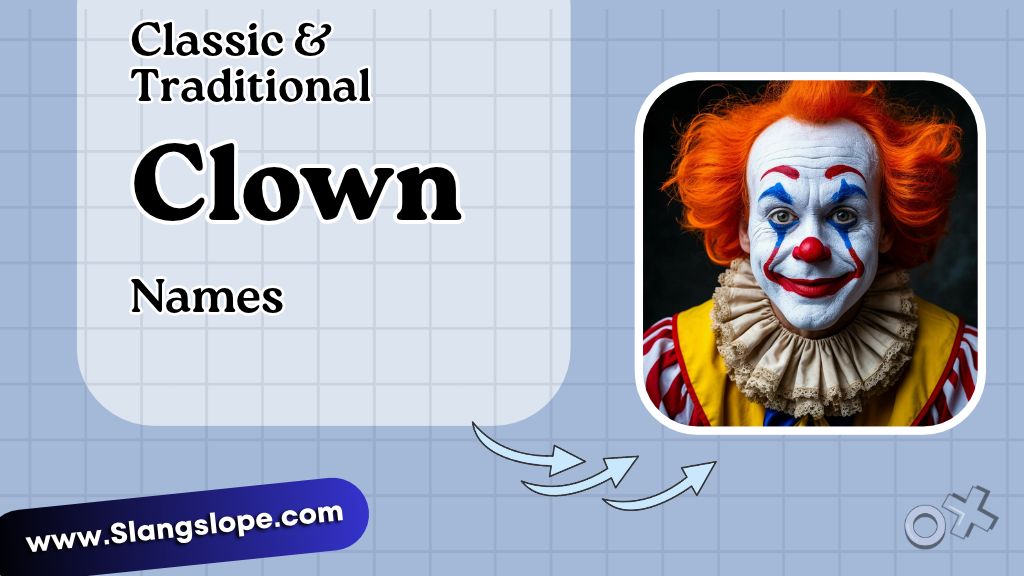
| Name | Meaning / Origin | Best For |
| Bobo | Playful reduplication; old circus slang for a bumbling fool | Children’s birthday parties, slapstick acts |
| Zippo | Snappy, energetic; suggests quick movement and surprise | Fast-paced physical comedy routines |
| Bingo | English word-game origin; feels instantly cheerful | School events, family entertainment |
| Doodles | Refers to aimless sketching; implies carefree chaos | Art-themed clown characters |
| Patches | Named for the patchwork costume tradition in commedia dell’arte | Traditional circus performers |
| Giggles | Onomatopoeic; mirrors the sound of light laughter | Toddler parties, soft comedy |
| Whimsy | Old English “whim-wham” meaning fanciful notion | Storytelling clowns, fairy-tale shows |
| Puddles | Suggests clumsiness and wet-slapstick gags | Mime-style clown acts |
| Ruffles | Named after the iconic ruffled collar of court jesters | Classic circus or theatrical clown roles |
| Tumbles | Describes acrobatic falling gags | Physical comedy and tumbling acts |
Funny & Punny Clown Names
| Name | Meaning / Origin | Best For |
| Honk Huckleberry | Combines horn-honking with a Southern folk name | Comedy duos, improv clown shows |
| Sir Squirts-a-Lot | Parody of medieval titles; references squirting flower gag | Interactive kids’ shows |
| Biff Boffo | “Biff” and “boffo” are both old showbiz terms for big laughs | Stand-up clown routines |
| Clownald McFunny | Fast food parody; audiences recognize it immediately | Satirical adult clown acts |
| Chuckles McSnort | Combines two laugh sounds into one absurd name | Improv comedy festivals |
| Wanda Wigglesworth | Alliterative; “wiggle” implies physical silliness | Children’s theater |
| Barry Bumblepants | “Bumble” suggests stumbling; “Barry” keeps it grounded | Clown duo sidekick roles |
| Otto Von Honkenheim | Fake German grandeur clashing with a silly honk reference | Parody circus acts |
| Fizz McGiggle | Carbonated energy plus laughter — chaotic combination | Birthday clown entertainers |
| Slippy McFlop | Describes the classic banana-peel fall | Slapstick stage performances |
Cute Clown Names for Kids’ Parties
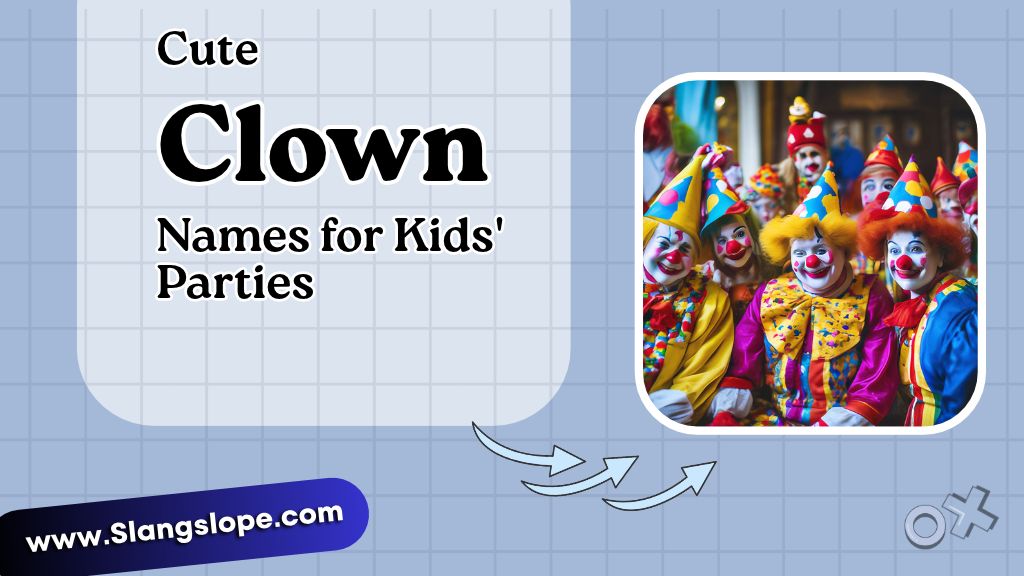
| Name | Meaning / Origin | Best For |
| Bubbles | Refers to soap bubbles — a universal kids’ delight | Bubble show performers |
| Sunny | Evokes warmth and brightness | Daytime birthday parties |
| Lolly | Short for lollipop; sweet and cheerful | Sweet-themed party entertainment |
| Twinkle | Suggests sparkle and magic | Fairy and magic clown acts |
| Peanut | Small and lovable; classic circus peanut reference | Small children, nursery events |
| Cookie | Warm, familiar, universally loved | School visits and daycare shows |
| Dazzle | Implies glitter and spectacle | Glitter and craft-themed parties |
| Rosie | Old-fashioned charm; rosy cheeks are a clown staple | Traditional birthday entertainers |
| Muffin | Soft, round, cozy — completely non-threatening | Shy children, low-energy events |
| Jellybean | Colorful candy; small and vibrant | Rainbow-themed party clowns |
Creepy & Horror Clown Names
| Name | Meaning / Origin | Best For |
| Rictus | Latin for the fixed grimace of a stretched mouth | Halloween haunted houses |
| Grim Chuckles | Oxymoron of death imagery and laughter | Horror comedy acts |
| Hollow | Suggests emptiness — no joy behind the smile | Psychological horror themes |
| Mr. Giggles | The “Mister” formality makes the giggles deeply unsettling | Creepypasta aesthetics, horror cosplay |
| Stabsworth | Absurdly dark surname combined with formality | Adult horror entertainment |
| Bonezo | “Bonzo” parody twisted toward skeletal imagery | Day of the Dead clown themes |
| Wretched | Old English for miserable; zero ambiguity | Extreme horror events |
| Lacky | Suggests a sinister servant lurking behind someone | Villain sidekick characters |
| Grimaldi’s Ghost | Named after Joseph Grimaldi, the father of clowning — haunted twist | Theatrical horror productions |
| Jester Mors | “Mors” is Latin for death — the death jester | Dark fantasy or gothic circus |
Elegant & Theatrical Clown Names
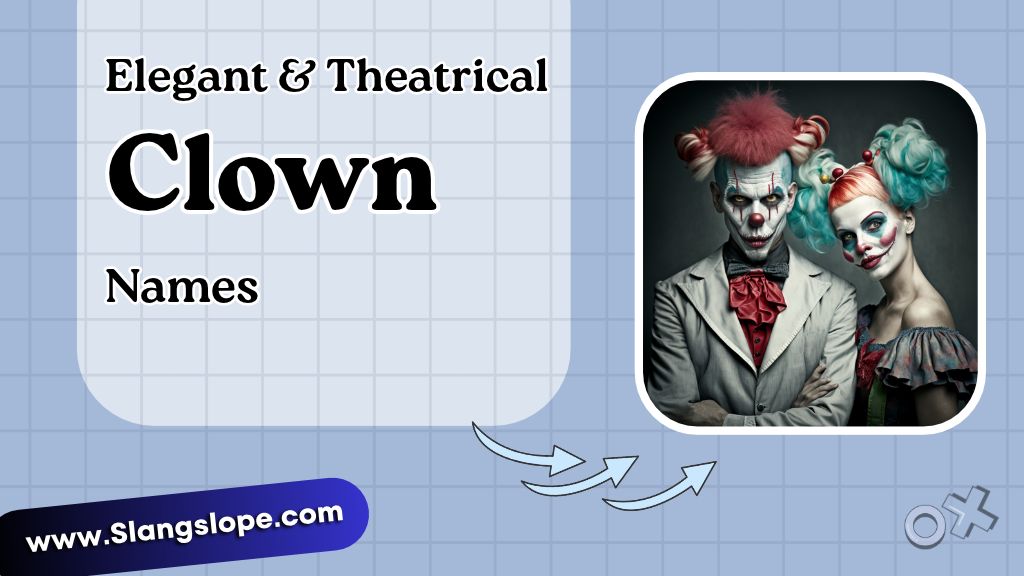
| Name | Meaning / Origin | Best For |
| Pierrot | French commedia dell’arte character; melancholy and poetic | Mime and theatrical arts |
| Harlequin | Italian “Arlecchino”; the trickster servant character | Masquerade and opera clown acts |
| Columbine | Female counterpart to Harlequin in Italian theater tradition | Female theatrical clown roles |
| Perrault | French surname evoking classic storytelling tradition | Storytelling clown performers |
| Scaramouche | Italian comic character known for boasting and cowardice | Satirical theatrical clowns |
| Aurelio | Latin origin meaning “golden”; regal circus feel | Sophisticated adult circus shows |
| Fantoccini | Italian for marionette; puppet-clown crossover aesthetic | Puppet-clown hybrid acts |
| Motley | Middle English for multi-colored cloth; the jester’s fabric | Renaissance fair and period shows |
| Arlette | French feminine diminutive; soft elegance with stage presence | Female clown performers |
| Soleil | French for “sun”; radiant and warm theatrical presence | French-style circus productions |
Famous & Iconic Clown Names (Real & Fictional)
| Name | Origin / Reference | Why It Matters |
| Bozo | Created by Alan Livingston in 1946 for Capitol Records | Launched the “franchise clown” concept in America |
| Pennywise | Stephen King’s It (1986 novel) | Defined the modern horror clown archetype |
| Krusty | The Simpsons animated series | The satirical burnt-out celebrity clown |
| Ronald McDonald | McDonald’s mascot since 1963 | Most recognized clown character globally |
| Pagliacci | Opera character from Leoncavallo’s 1892 Pagliacci | The archetype of “crying on the inside” |
| Emmett Kelly | Real circus performer (1898–1979); created “Weary Willie” | Pioneered the sad/tramp clown character type |
| Joseph Grimaldi | Real performer (1778–1837); called the “King of Clowns” | Established the white-face clown makeup tradition |
| Clarabell | Howdy Doody TV show (1947) | First major clown character on American television |
| Pogo | John Wayne Gacy’s self-drawn clown alter ego | Central to why clown-phobia became widespread culturally |
| Slappy | Various horror anthologies | Represents the evil puppet-clown hybrid subgenre |
Clown Names from Around the World
| Name | Country / Culture | Tradition |
| Augusto | Spain & Latin America | The red-nosed bumbling clown type in Spanish circus |
| Auguste | France / Germany | The counterpart to the “white-face” clown in European circus |
| Petrouchka | Russia | Puppet-clown folk character from Russian street theater |
| Karagöz | Turkey | Shadow puppet trickster; Turkey’s equivalent of a clown figure |
| Vidushaka | India | Sanskrit theater’s comic fool character, often a court jester |
| Pulcinella | Italy | Ancestor of Punch (of Punch and Judy); commedia dell’arte |
| Pajtas | Hungary | Folk clown character from Hungarian village festivals |
| Tsukimi Clown | Japan | Festival clown characters tied to moon-viewing celebrations |
| Zanni | Northern Italy | Servant-clown archetype; root of the word “zany” in English |
| Hanswurst | Germany/Austria | Sausage-obsessed buffoon; popular in 17th–18th century theater |
How to Build the Perfect Clown Name
Syllable rhythm matters more than meaning. Say the name out loud three times fast. If it trips up your tongue, it’ll trip up your audience. Two-syllable names with a hard consonant opening (Bingo, Patches, Bobo) hit the ear clean and stick.
Match the name’s energy to the act’s energy. A horror clown named “Bubbles” creates intentional dissonance — which works if that’s the point. A kids’ birthday clown named “Grimaldi’s Ghost” is just confusing.
Avoid names that sound like real names at a glance. “Barry Bumblepants” works because Barry is grounded and human while Bumblepants is absurd. “Steve the Clown” is forgettable because both halves feel ordinary.
For stage use, test the name with children under 8. If they can repeat it, spell it phonetically, and don’t accidentally make it sound like something rude — you’re good.
The “three-second rule” for horror clown names: Read it in a quiet room. If it produces mild discomfort in three seconds, it works. If you have to explain why it’s scary, it doesn’t.
Quick Style Comparison Table
| Style | Tone | Best Venue | Avoid If… |
| Classic (Bobo, Patches) | Warm, familiar | Family shows, circuses | You want memorability beyond the basics |
| Punny (Honk Huckleberry) | Absurd, comedic | Comedy festivals, improv | Your audience is under 5 or over 70 |
| Cute (Bubbles, Sunny) | Soft, safe | Kids’ parties, daycares | You need to be taken seriously as a performer |
| Theatrical (Pierrot, Harlequin) | Artistic, layered | Stage productions, festivals | Your audience wants pure slapstick |
| Horror (Rictus, Hollow) | Unsettling, dark | Halloween events, adult shows | Children are in the audience |
| International (Zanni, Pulcinella) | Cultural, rich | Art events, theater | General mainstream entertainment crowds |
Discover More Names Guide

Hi, I am Malaika and I studied MPhil English at The University of Faisalabad. Names have always fascinated me — especially the stories, cultural roots, and hidden meanings behind the labels we give to people, pets, places, and characters.
I write for Slangslope.com because naming isn’t just about picking words; it’s about finding the right identity. My work focuses on uncovering accurate origins, real-world usage, and creative naming ideas that fit actual context rather than generic lists.
My goal is simple: if you leave a page finding the perfect name or understanding its meaning better than before, then the article has done its job.