Court jesters lived dangerously one bad joke and they’d lose their head. Their names had to be as memorable as their antics.
Classic & Historical Jester Names
| Name | Meaning / Origin | Best For |
| Patch | Old English; referred to a patched costume | Traditional court jester characters |
| Scogan | From Henry Scogan, real English court fool | Historical fiction, RPGs |
| Triboulet | Famous French jester to Francis I | French-themed characters |
| Gonella | Italian court fool of Ferrara, 15th century | Renaissance fair personas |
| Will Sommers | Henry VIII’s beloved jester | Tudor-era storytelling |
| Archibald Armstrong | James I’s notorious Scottish fool | Scottish-themed characters |
| Chicot | Henri III’s jester, also a spy | Dual-personality characters |
| Claus Narr | German court fool, 16th century | German medieval settings |
| Stańczyk | Poland’s most famous royal jester | Eastern European lore |
| Nasreddin | Turkish/Persian trickster-sage | Folklore, wisdom-fool archetypes |
Fantasy & Fictional Jester Names

| Name | Meaning / Origin | Best For |
| Motley | English; refers to multicolored jester cloth | DnD characters, fantasy novels |
| Jinks | From “high jinks,” meaning playful mischief | Lighthearted trickster NPCs |
| Folly | Latin follis (fool, bellows) | Whimsical villain jesters |
| Quibble | Middle English; to evade with wordplay | Verbal trickster characters |
| Merritt | Old French merite; ironic for a fool | Clever, self-aware jesters |
| Zanni | Commedia dell’arte servant-clown archetype | Theatre, Italian-style comedy |
| Drollery | English; something amusingly odd | Storybook jesters |
| Jocular | Latin jocularis (joking, playful) | Comic relief characters |
| Puck | Old English/Irish; mischievous fairy spirit | Shapeshifter trickster types |
| Harlequin | Commedia dell’arte; possibly from Hellequin (demon) | Acrobatic, theatrical jesters |
| Zephyrin | Greek zephyros (west wind); breezy | Light, quick-witted fool personas |
| Capricio | Italian capriccio (whim, fancy) | Impulsive, chaotic jesters |
| Mordecai | Hebrew; “warrior” used ironically | Serious-looking fool characters |
| Wren | Old English; small, quick bird | Nimble, fast-talking jesters |
| Silvertongue | Invented compound; refers to eloquent deceit | Manipulative court fools |
Funny & Punny Jester Names

| Name | Meaning / Origin | Best For |
| Sir Laughs-a-Lot | Play on Sir Lancelot | Comedy shows, party characters |
| Chucklesworth | Invented noble-sounding title | Victorian parody jesters |
| Gigglepants | Self-explanatory compound | Kids’ party entertainers |
| Baron von Snort | Mock German aristocracy | Satirical characters |
| Lord Bumblefool | Compound of bumble + fool | Bumbling sidekick jesters |
| Willy Nilly | English idiom; haphazard action | Chaotic, unplanned tricksters |
| Jestimus Prime | Parody of Optimus Prime | Pop culture costume events |
| Folly McFoolface | Internet naming trend parody | Meme-based characters |
| Chortleby | Invented from chortle (Lewis Carroll) | Bookish comedy characters |
| Sir Prancelot | Prance + Lancelot | Over-dramatic fool personas |
| Tumbleweed Tim | Tumbling acrobat + Western flair | Wild West carnival jesters |
| Kneeslapper | Self-explanatory | Slapstick performers |
Female Jester Names
| Name | Meaning / Origin | Best For |
| Folly | Latin follis; the female fool archetype | Strong female trickster leads |
| Pippa | Greek philippa; lover of horses | Energetic, lively jesters |
| Zara | Arabic zahara (to blossom); bright | Glamorous court fools |
| Merry | Old English myrige; pleasant, cheerful | Classic female jester personas |
| Columbine | Commedia dell’arte; Harlequin’s love interest | Paired jester duos |
| Rilla | Germanic ril; small brook | Quiet, subtle trickster types |
| Whimsy | English; playful fancy | Fairy-tale jesters |
| Lark | Old English; a songbird, also means to play | Musical fool characters |
| Feste | From Shakespeare’s Twelfth Night | Literary-inspired personas |
| Viola | Latin viola (violet); also Feste’s counterpart | Shakespeare-themed characters |
| Mab | Celtic; fairy queen | Mischievous magical jesters |
| Sable | Old French; black, for dark wit | Gothic comedy characters |
| Trixie | Latin beatrix; she who brings happiness | Fun, upbeat entertainers |
| Bellamy | Old French bel ami; beautiful friend | Charming, social jesters |
| Pix | Short for pixie; small mischievous spirit | Tiny, quick tricksters |
Dark & Villain Jester Names
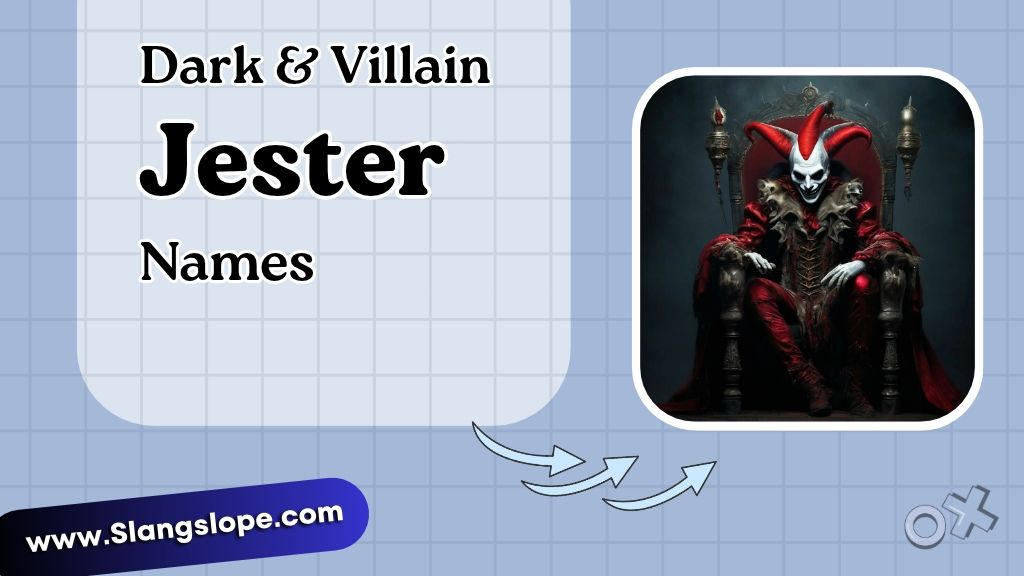
| Name | Meaning / Origin | Best For |
| Malice | Latin malitia; intention to harm | Antagonist court fools |
| Grimalkin | Scottish; old grey cat, symbol of treachery | Sinister, cat-like jesters |
| Vexen | Invented from vex; to irritate | Antagonistic trickster villains |
| Morbello | Invented Italian-style; morbo (disease) + bello (beautiful) | Plague-doctor jester hybrids |
| Scorn | Old French escorner; to mock harshly | Ruthless satirist characters |
| Dread Motley | Dread + classic jester cloth | Dark fantasy RPG bosses |
| Cackling Jack | Cackle + Jack (generic everyman) | Horror carnival characters |
| Ruin | Latin ruina; collapse | Apocalyptic fool archetypes |
| Nightcap | Ironic; the fool’s hat turned dark | Gothic jester characters |
| Bitterly | Invented adverb-name from bitter | Tragic, fallen jester personas |
Shakespeare-Inspired Jester Names
| Name | Meaning / Origin | Best For |
| Feste | Twelfth Night; professional fool | Theatre productions |
| Touchstone | As You Like It; the pragmatic fool | Wise-fool characters |
| Lavatch | All’s Well That Ends Well; cynical clown | Dark comedy personas |
| Costard | Love’s Labour’s Lost; country bumpkin | Rustic fool characters |
| Trinculo | The Tempest; cowardly jester | Cowardly-but-funny archetypes |
| Autolycus | The Winter’s Tale; rogue and trickster | Con-artist jester types |
| Bottom | A Midsummer Night’s Dream; unwitting fool | Accidental comedy personas |
Circus & Carnival Jester Names
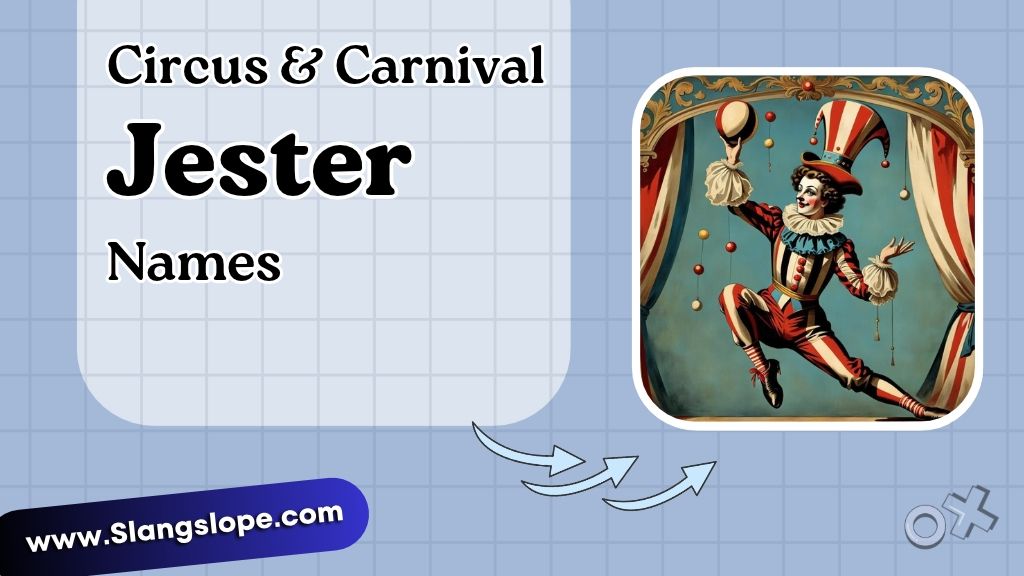
| Name | Meaning / Origin | Best For |
| Pezzo | Italian; pazzo (crazy) shortened | Italian circus performers |
| Grimaldi | From Joseph Grimaldi, father of modern clowning | Classic circus characters |
| Caper | Latin caper (goat); to leap and frolic | Acrobatic jesters |
| Spangle | Middle English; glittering ornament | Flashy showmen |
| Rondo | Italian rotondo; round, cyclical | Tumbling performers |
| Zigzag | Imitative word; erratic movement | Unpredictable trickster acts |
| Pepper | Old French poivre; sharp and spicy | Quick-witted carnival barkers |
| Bobo | Spanish; fool, simpleton | Latin American circus traditions |
DnD & RPG Jester Names
| Name | Meaning / Origin | Best For |
| Jinx | Old English variant of jynx; bad luck charm | Chaotic neutral characters |
| Riddle | Old English rǣdels; mystery, puzzle | Sphinx-like trickster builds |
| Mote | Old English; a speck, something tiny | Small-but-mighty jesters |
| Ludo | Latin ludere; to play | Bard/jester multiclass builds |
| Fable | Latin fabula; story | Storytelling fool characters |
| Snare | Old English snear; trap | Rogue-jester hybrids |
| Vesper | Latin; evening star | Mysterious nighttime tricksters |
| Omen | Latin omen; sign or portent | Prophetic fool archetypes |
| Rumble | Germanic; a low rolling sound | Intimidating jester tanks |
| Quill | Old French quille; pin, then feather pen | Bard-class jesters |
Editor’s Top Picks
These ten names outperform the rest in versatility, originality, and sheer character weight:
1. Stańczyk — The real Polish royal jester painted by Jan Matejko as a symbol of national conscience. If you want a name that carries genuine historical gravitas and almost zero mainstream recognition, this is it. Perfect for serious creative projects.
2. Triboulet — Victor Hugo wrote a play about him (Le Roi s’amuse, later adapted into Verdi’s Rigoletto). A jester name with operatic legacy built right in.
3. Silvertongue — Works as a villain, a charming rogue, or a bard. Three character builds, one name.
4. Folly — Deceptively simple. The word itself has 600 years of literary history, from Erasmus’s Praise of Folly to modern stage. Never feels generic.
5. Harlequin — The original commedia character has survived five centuries because the name itself sounds like acrobatics. Hard consonants, quick syllables.
6. Ludo — Latin for “I play.” A bard-class name that tells you everything about the character in four letters.
7. Grimalkin — For anyone building a sinister jester with a cat-like quality. Shakespearean, eerie, and utterly distinctive.
How to Pick the Right Jester Name
Match syllable count to personality. Short, punchy names (Jinx, Puck, Mab) read as quick and chaotic. Longer names (Chucklesworth, Jocular, Silvertongue) suggest a theatrical, self-important fool — which is its own kind of comedy.
Consider the “Say It Aloud” test. A jester’s name gets announced in court, called across a carnival, or shouted mid-battle. If it doesn’t land when spoken fast, drop it.
Irony is a tool. Naming a bumbling fool something that means “warrior” or “noble” (Mordecai, Bellamy) creates instant character tension without a single line of backstory.
Pair contrasting name halves. The funniest invented names combine something dignified with something absurd: Baron + von Snort, Lord + Bumblefool. One half up, one half down.
For DnD characters, lean toward names with Latin or Old English roots — they feel native to fantasy settings without sounding made-up.
Quick Comparison: Choosing Your Jester’s Name Style
| Style | Best Name Examples | Tone | Ideal Context |
| Historical/Authentic | Stańczyk, Triboulet, Gonella | Serious, grounded | Historical fiction, essays |
| Shakespearean | Feste, Touchstone, Trinculo | Literary, theatrical | Stage, creative writing |
| Dark/Villain | Grimalkin, Malice, Vexen | Sinister, dry | Horror, dark fantasy |
| Funny/Punny | Chucklesworth, Sir Laughs-a-Lot | Silly, warm | Parties, kid events |
| Fantasy/RPG | Ludo, Jinx, Silvertongue | Versatile, cool | Gaming, worldbuilding |
| Female Fool | Feste, Columbine, Whimsy | Varied, rich | Strong female leads |
FAQs About Jester Names
What is a good name for a jester character in DnD?=
Ludo, Jinx, Fable, and Riddle all work well because they carry meaning without sounding like costume-shop labels. For a chaotic neutral bard, Quill or Snare adds a slightly dangerous edge that pure comedy names lack.
What were real jesters actually called?=
Many went by single names or nicknames tied to their appearance or origin. Triboulet, Stańczyk, Gonella, Will Sommers, and Archibald Armstrong are among the most documented. Several, like Chicot, also held political influence behind the comedy.
Can a jester name work for a serious character?=
Yes — the best ones do. Stańczyk is painted as a man weeping alone while the court parties around him. Feste from Twelfth Night is arguably the play’s most intelligent character. A jester name on a serious character creates productive tension.
What makes a jester name sound authentic vs. made-up?=
Authentic ones tend to come from real commedia dell’arte traditions, Shakespearean text, or documented court history. Made-up names that feel real usually borrow phonetic patterns from Latin, Italian, or Old English short vowels, hard consonants, and no more than three syllables.
Discover More Names Guide

Hi, I am Malaika and I studied MPhil English at The University of Faisalabad. Names have always fascinated me — especially the stories, cultural roots, and hidden meanings behind the labels we give to people, pets, places, and characters.
I write for Slangslope.com because naming isn’t just about picking words; it’s about finding the right identity. My work focuses on uncovering accurate origins, real-world usage, and creative naming ideas that fit actual context rather than generic lists.
My goal is simple: if you leave a page finding the perfect name or understanding its meaning better than before, then the article has done its job.